
You mow a patch of lawn in July and it looks perfect. Two weeks later it’s creeping into the flower bed and squeezing through driveway cracks. That’s often Bermuda grass doing what it does best, which is spread. Plenty of home owners across the South and the Transition Zone plant it on purpose. Others find it moving into a fescue or zoysia lawn and can’t tell whether it’s friend or invader.
So what does Bermuda grass look like? It’s a fine-textured, gray-green to deep green warm-season turf with thin pointed blades, wiry runners above and below the soil, and a seedhead that fans out like fingers. This guide walks through seven visual clues you can check in about ten minutes. You’ll also see how the grass changes from spring to winter, how it compares with crabgrass, zoysia, and St. Augustine, and a simple three-step test. A short FAQ at the end covers the questions homeowners ask most.
What Does Bermuda Grass Look Like? The Short Answer
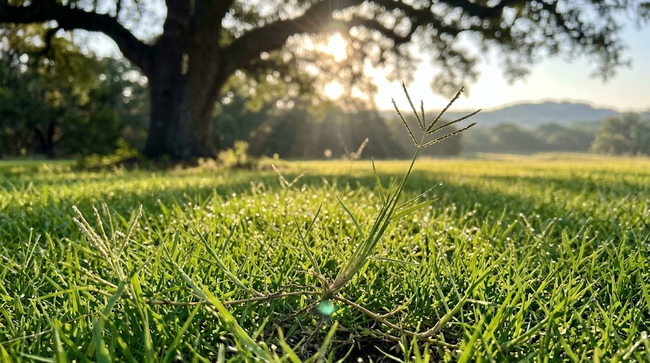
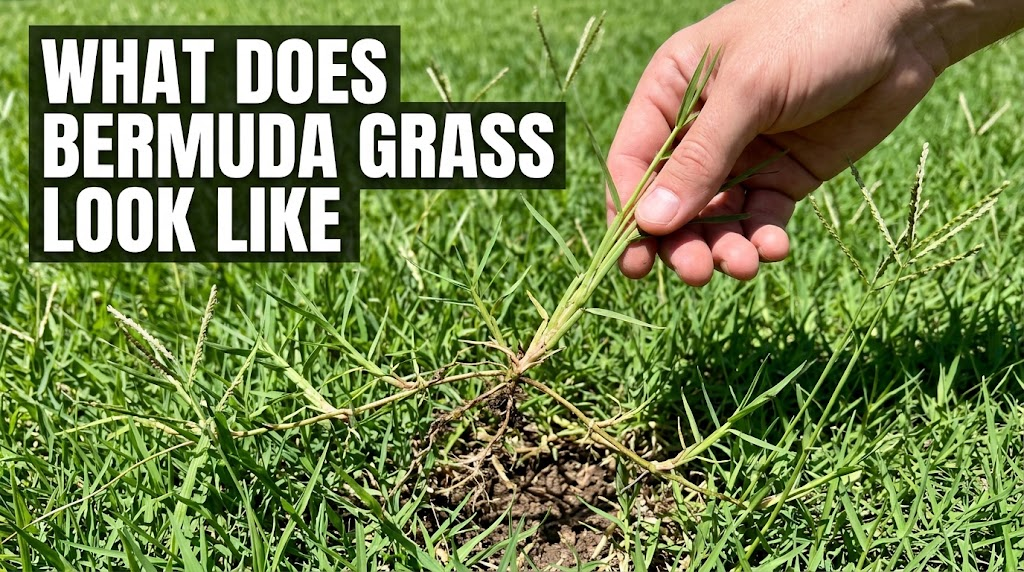
Bermuda grass (Cynodon dactylon) is a warm-season turfgrass with narrow, pointed blades about 1/16 to 1/8 inch wide, a gray-green to dark green color, and a dense, low mat built from surface runners (stolons) and underground stems (rhizomes). In late summer it often produces seedheads with three to seven finger-like spikes.
The 7 Visual Clues
So what does Bermuda grass look like up close? Work through these in order.
1. Fine, narrow blades
Blades are flat, tapered, and usually 1 to 4 inches long. They feel slightly rough along the edges. Hybrid types such as Tifway 419 feel finer and softer underfoot than common Bermuda.
2. Gray-green to deep green color
Common Bermuda often looks a little bluish or gray-green. Improved hybrids tend toward a darker, richer green. In full sun the color is even across the lawn, which is a good sign you’re looking at turf and not a weed patch.
3. Runners lying on top of the soil
Part a clump with your fingers and look for thin, wiry stems running sideways. These stolons have joints about every inch, and each joint can root and send up a tuft of leaves. Some runners show a reddish or purple tint.
4. Rhizomes just below the surface
Pull a small plug with a trowel. You’ll find pale, scaly underground stems running through the top few inches of soil. These are why Bermuda grass pops up again after you pull it, and why it crosses sidewalk edging so easily.
5. Finger-shaped seedheads
Look for a stem topped with three to seven slim spikes radiating from a single point, like a hand with the fingers spread. Spikes run roughly one to three inches long and can look purplish. Hybrids tend to make fewer viable seedheads than common Bermuda.
6. A fringe of hairs where the blade meets the stem
This is the ligule, and it’s the clue lawn pros trust most. On Bermuda grass it’s a tiny ring of short white hairs. A cheap hand lens makes it easy to see.
7. A tight, springy mat
Healthy Bermuda grass forms a dense carpet that bounces back after foot traffic. Mowed at 1 to 2 inches, it looks almost like a putting surface in the best cases. Thin spots, by contrast, point to shade, because this grass wants full sun.
| Clue | What you see | Where to check |
|---|---|---|
| Blades | 1/16 to 1/8 inch wide, pointed | Mid-lawn, in sun |
| Color | Gray-green to dark green | Whole lawn |
| Stolons | Wiry surface runners, rooting at joints | Lawn edges, bed borders |
| Rhizomes | Pale underground stems | Soil plug, top few inches |
| Seedheads | 3 to 7 finger-like spikes | Unmowed patches, late summer |
| Ligule | Ring of short white hairs | Base of the blade |
| Growth habit | Dense, low, springy mat | Any sunny area |
What Does Bermuda Grass Look Like Through the Seasons?
Color confuses more people than anything else. So what does Bermuda grass look like in January? Straw-tan to brown, and that doesn’t mean it died. It’s dormant. Warm-season grasses shut down when cold arrives, and the stolons stay firm and alive under the surface.
| Season | Typical look | What’s happening |
|---|---|---|
| Spring | Tan turning green from the base up | Greens up as soil warms toward the mid-60s °F |
| Summer | Dense, dark green, fast growth | Peak growth in heat and full sun |
| Fall | Seedheads appear, color starts to fade | Growth slows as nights cool |
| Winter | Straw-colored, flat, dormant | Dormant after frost; roots survive |
Bermuda grass does best in USDA zones 7 through 10, which covers most of the Southeast, Texas, the Southwest, and parts of California. Northern lawns rarely keep it through hard winters.
Bermuda Grass vs. Common Lookalikes
So what does Bermuda grass look like next to its lookalikes? Here’s how to separate them.
| Grass | Blade | Growth habit | Biggest tell |
|---|---|---|---|
| Bermuda grass | Narrow, pointed, gray-green | Stolons and rhizomes | White-hair ligule; finger seedhead |
| Crabgrass | Wider, light green, floppy | Annual; spreads in a star from one center | Pulls out easily; no rhizomes |
| Zoysia | Stiff, 1/8 inch, dark green | Slow, dense, stolons and rhizomes | Prickly feel; slow spread |
| St. Augustine | Wide, flat, blunt tip | Thick stolons only | Coarse, broad blades |
| Tall fescue | Coarse, upright | Bunches, no runners | Stays green in winter |
The quickest split is crabgrass versus Bermuda. Crabgrass dies after the first hard frost and leaves bare spots. Bermuda comes back.
A 3-Step Test You Can Do Today
What does Bermuda grass look like in your yard? Try this.
- Tug a runner. Pull gently on a surface stem. If it roots at the joints and snaps back, it’s likely Bermuda.
- Check the light. If the grass thins out under trees and thrives in 8 hours of sun, that fits.
- Wait for frost. Bermuda turns tan while fescue and rye stay green.
If you’re still unsure, take a sample to your county Cooperative Extension office. Turf programs at land-grant universities such as NC State, University of Georgia, and Texas A&M AgriLife identify grass samples and publish regional lawn guides.
FAQ
Is brown Bermuda grass dead?
Usually not. Brown grass in winter is dormant. Tug a runner: if it’s firm and pale inside, the plant is alive. Dead stems snap dry and crumble.
Does Bermuda grass grow in shade?
Poorly. It needs about 6 to 8 hours of direct sun. In shade it thins, turns weak, and loses out to other grasses.
What does Bermuda grass look like when it needs water?
The blades fold or roll, the color turns dull blue-gray, and footprints stay visible after you walk across it. Water deeply when you see those signs.
Is Bermuda grass a weed or a lawn grass?
Both, depending on where it grows. It’s a prized turf on golf courses and southern lawns. In a zoysia, fescue, or flower bed, it acts like an aggressive weed.
Conclusion
Once you know what Bermuda grass looks like, it’s hard to miss: narrow gray-green blades, wiry runners, a white-hair ligule, and those finger-shaped seedheads. Check two or three clues instead of relying on color alone, since dormancy and mowing height change how it reads. Confirm with a plug and a hand lens before you treat or remove anything.