
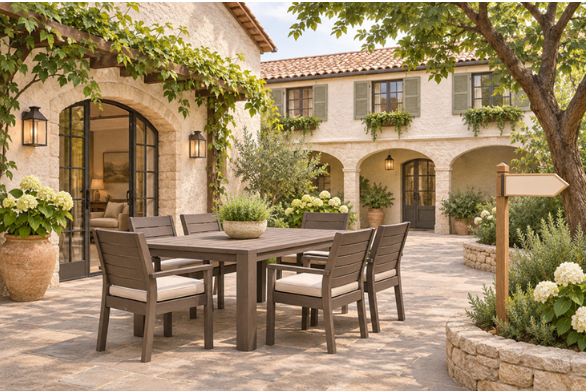
Guests often remember a courtyard through a small moment: breakfast in the shade, a quiet conversation after travelling or somewhere comfortable to wait while a room is being prepared. The furniture makes those moments possible. When it’s awkward to sit down or every table blocks a doorway, even an attractive courtyard can remain mostly empty.
Guesthouse courtyard furniture ideas should begin with the stay you want to offer. A modest space can be welcoming without holding a complete outdoor living room. Choose pieces that suit the way guests will use them, give people room to move and make the daily care realistic for your team.
Choose the courtyard’s main role
Decide whether the space mainly serves breakfast, relaxation or occasional gatherings. It may do more than one job, but a clear priority helps you choose the furniture. A low table works differently from a dining surface, and a large group arrangement may leave nowhere for someone who wants a quiet coffee.
Consider the number of guests likely to be outside together. Avoid buying a separate dining set for every room if the courtyard can’t accommodate them comfortably. A mixture of smaller tables and suitable individual seats may offer more flexibility.
Think about the courtyard’s relationship with indoor spaces, too. If guests carry drinks from a lounge, the route matters. If staff serve breakfast outdoors, allow for trays and clearing up. The furniture should support the service you can actually provide, rather than suggest an arrangement the business struggles to maintain.
Give movement its share of the space
Mark the routes between room doors, reception and shared facilities before choosing table positions. Guests should be able to pass someone who is seated without edging sideways or stepping into a flower bed. Include luggage in the exercise, especially if the courtyard is part of the arrival route.
Measure with chairs pulled out. A neat furniture footprint can hide the space people need to use it. Try carrying a tray through the arrangement and check whether a door can open while the nearest seat is occupied.
Keep a practical route for cleaning as well. If staff must move several tables to reach one corner, the space creates extra work every day. Furniture will eventually be pushed into easier positions, and those positions may be less attractive than a layout designed around the real routine from the start.
Compare the whole furniture piece
Material is part of the decision, alongside comfort, dimensions and care. NeoTimber’s composite outdoor furniture offers a range to assess for the intended setting. Review the current specifications and confirm suitability for your proposed hospitality use before ordering.
Look at the table and seating together. Can guests sit comfortably with their legs under the table? Is the seat useful for the length of time someone might spend over breakfast? How will the team clean around the frame and move the piece when necessary?
Ask about assembly and recommended maintenance. A furniture set becomes part of the guesthouse’s working equipment, so the care instructions need to be available to the people looking after it. Choose through the actual demands of the property rather than assuming that a particular material description answers every practical question.
Offer a comfortable choice of seats
People enjoy different sitting positions. Some settle happily into a low chair, while others prefer an upright seat with arms. A small range of suitable options can make the courtyard more welcoming without making it look uncoordinated.
Connect the pieces through a consistent finish, colour or shape. They don’t all have to come from one matching set. Leave enough room beside seating for a bag or mobility aid where appropriate, and provide a useful surface for a cup.
Try furniture before purchasing when possible. Comfort over a few minutes of browsing can differ from comfort through a relaxed meal. Think about wet-weather handling and storage for any loose cushions. A setup requiring many accessories to be brought in and out may be difficult to keep ready during a busy day.
Position seats for the actual conditions
Watch the courtyard through the day. Note where the sun falls at breakfast and which corner becomes exposed to wind. The most attractive position from a bedroom window may be less pleasant when someone sits there for half an hour.
Offer some choice where the site allows it. Shade structures and umbrellas need suitable assessment, fixing and operating arrangements for the location. Decide who deals with them when conditions change, rather than leaving that responsibility unclear.
Use planting to soften the edges without narrowing the routes. Consider mature size and watering access. Pots placed tightly against furniture can make cleaning awkward, while overflowing plants may interfere with a seat that was comfortable at installation. Keep the scheme proportionate to the care the property can provide.
Help guests understand the place
Visitors may need to find breakfast, reception or the exit without asking someone to escort them. Clear information makes the courtyard feel easier to use, particularly on the first morning of a stay.
For professionally made signage, Alpen Signs is a supplier to consider when planning the property’s directions. Decide what needs explaining and where someone needs the answer. A sign at a route junction may be useful; several repeated notices on the walls may simply make the space feel busy.
Keep the wording concise and the design readable. Check any applicable restrictions before installation. Separate essential wayfinding from seasonal promotions so guests can identify the information they need without searching through menus, offers and decorative messages.
About NeoTimber
NeoTimber includes composite outdoor furniture within a wider range of outdoor products. Its furniture resources provide product details and care information that can help owners compare pieces before fitting out a courtyard.
For a guesthouse, bring those details into the wider layout discussion. Confirm the dimensions, placement and maintenance needs of the specific items being considered. A consistent material palette can help connect furniture with the surrounding exterior, but comfort and day-to-day use should guide the final selection. The right piece is one that fits the property’s routine as well as its appearance.
Keep the courtyard pleasant after the opening day
Establish a routine for spills, fallen leaves and checks on the furniture. Leave enough access around the layout to carry out that work. Include the courtyard in the guesthouse’s reporting process so a loose component or damaged surface reaches the person who can deal with it.
Pay attention to room privacy and evening conversation. Place social seating thoughtfully, especially beneath bedroom windows, and communicate reasonable use arrangements clearly. Planting can make a place feel more private without necessarily providing meaningful sound control.
Watch what guests do once the space is in use. If they repeatedly move one chair, they may be seeking shade, company or a better view. Adjust the plan while keeping the principal routes clear. A successful courtyard earns its place through comfortable, ordinary use, giving guests somewhere they want to return to during their stay.Read more at https://myflashyhome.com/.