
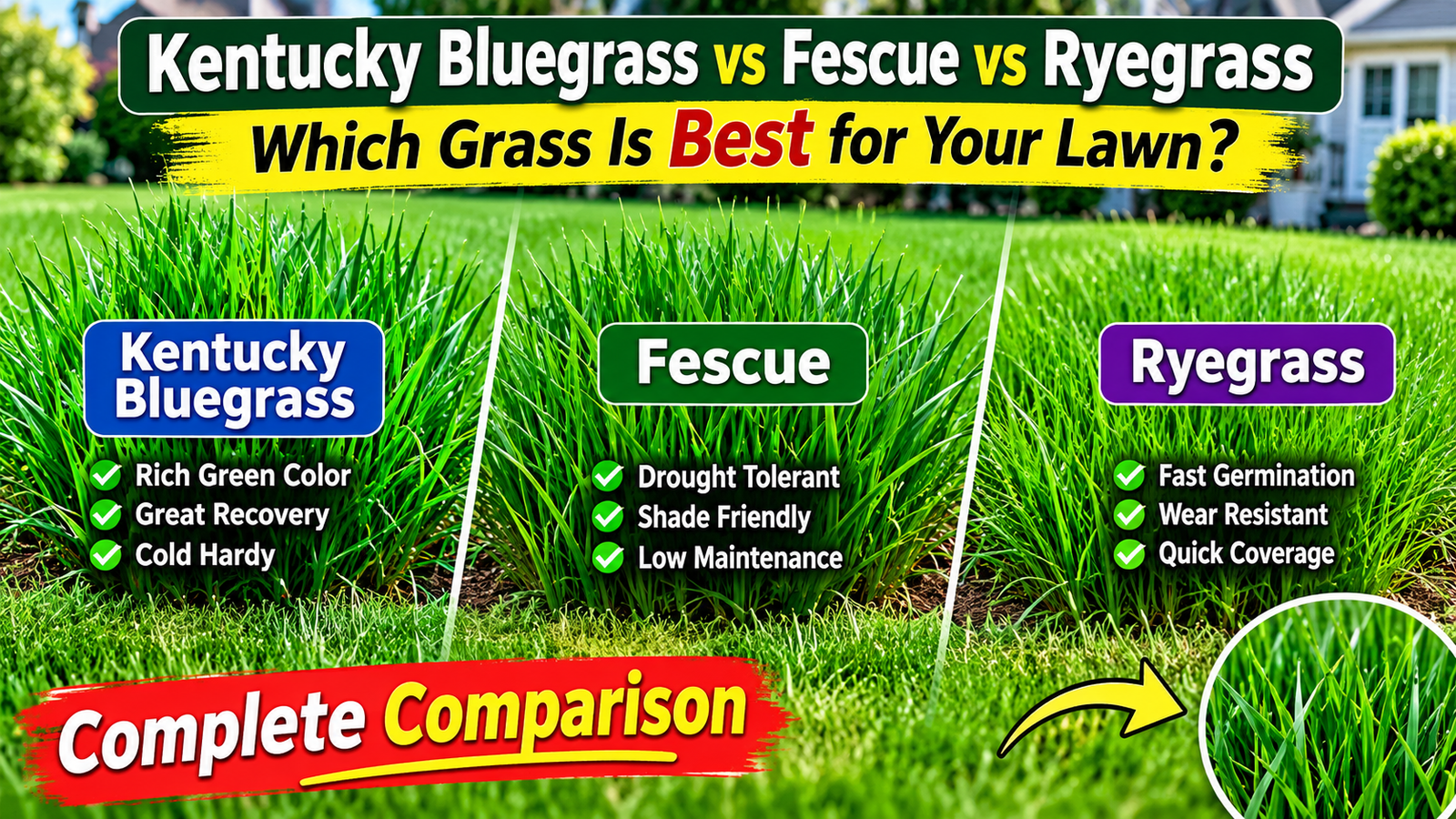
Pick the wrong grass seed and you will know by July. The lawn browns, the bare patches stay bare, or the mower chews through a shaggy mess you never wanted. That is why the kentucky bluegrass vs fescue vs ryegrass question matters more than most homeowners expect. These three cool-season grasses dominate lawns across the northern half of the country and the transition zone, and each one solves a different problem. Bluegrass repairs itself and looks like a ballpark outfield. Tall fescue shrugs off heat and dry spells. Perennial ryegrass sprouts in about a week and takes a beating from kids and dogs. None of them wins in every yard, and the bag with the prettiest photo is rarely the right one. This guide compares kentucky bluegrass vs fescue vs ryegrass on the factors that decide lawn success: sun, water, traffic, climate and upkeep. You will get a quick answer, three tables, a simple yard test and a short FAQ. The numbers follow land-grant university extension guidance, so you can check them against your own state’s turf recommendations.
Which Grass Wins in the Kentucky Bluegrass vs Fescue vs Ryegrass Debate?
For kentucky bluegrass vs fescue vs ryegrass, the answer depends on your yard. Choose Kentucky bluegrass for sunny northern lawns where you want a dense, self-repairing carpet. Choose tall fescue for hot, dry or partly shaded yards that need low upkeep. Choose perennial ryegrass for fast results and heavy foot traffic, ideally blended with bluegrass.
| Trait | Kentucky Bluegrass | Tall Fescue | Perennial Ryegrass |
|---|---|---|---|
| Germination | 14 to 30 days | 7 to 14 days | 5 to 10 days |
| Growth habit | Spreads by rhizomes | Bunch type | Bunch type |
| Blade texture | Fine to medium | Coarse | Fine and glossy |
| Drought tolerance | Fair (goes dormant) | Best of the three | Fair to poor |
| Shade tolerance | Poor | Moderate | Poor to moderate |
| Wear recovery | Excellent | Slow | Good |
| Mowing height | 2.5 to 3.5 in | 3 to 4 in | 2 to 3 in |
| Seed per 1,000 sq ft | 1 to 2 lb | 6 to 8 lb | 6 to 9 lb |
Seeding rates are typical extension ranges. Follow the label on your bag.
How Each Grass Behaves Once It Is Growing
Kentucky bluegrass
Bluegrass is slow to start and generous once it does. Underground stems called rhizomes creep sideways and fill thin spots, which is why sports fields lean on it. It wants about six hours of direct sun, regular feeding and decent water in summer. In a long drought it turns straw-colored, then greens up again when rain returns.
Tall fescue
This is the low-drama option. Roots run deeper than the other two, so it stays green through dry stretches that flatten bluegrass. Because it grows in clumps, damaged areas do not heal on their own, so plan to overseed every few years. One warning: look for “turf-type” on the label. Old pasture varieties like Kentucky 31 are coarse and look like weeds next to a modern cultivar.
Perennial ryegrass
Ryegrass is the sprinter. It shows green within a week, which makes it useful for erosion control and quick patch jobs. It also has the weakest tolerance for both brutal winters and scorching summers. Read the label carefully. Annual ryegrass is cheap, dies off, and is a common bait in bargain mixes. You want the word “perennial.”
A 60-Second Yard Test to Choose Your Grass
Forget the bag photo. Answer four questions: how many hours of sun does the spot get, how often will you water, how much foot traffic does it see, and how patient are you? Then match your answers to the table to settle kentucky bluegrass vs fescue vs ryegrass for your lawn.
| Your yard | Best pick | Why |
|---|---|---|
| Full sun, cool climate, want a lush look | Kentucky bluegrass | Dense turf that self-repairs |
| Hot summers, limited watering | Tall fescue | Deepest roots, best drought hold |
| Partial shade under trees | Tall fescue or a fine fescue blend | Handles lower light |
| Kids and dogs, bare spots to fill fast | Ryegrass and bluegrass blend | Fast cover now, repair later |
| Slope that needs quick erosion cover | Perennial ryegrass in the mix | Sprouts in about a week |
| Minimal mowing and feeding | Tall fescue | Lower nitrogen demand |
Water habits matter more than most people admit. Borrowing smart home ideas such as a soil-moisture sensor or a weather-linked sprinkler controller can stop the overwatering that feeds lawn disease, and they pay off most with bluegrass.
Best Grass by Region in the United States
| Region | Strongest choice | Note |
|---|---|---|
| Northeast, Upper Midwest, mountain states | Kentucky bluegrass | Often blended with fine fescue or ryegrass |
| Transition zone (Mid-Atlantic, Missouri, Tennessee, Virginia) | Tall fescue | Handles hot summers and cold winters |
| Pacific Northwest coast | Ryegrass, bluegrass and fescue blends | Mild, moist climate suits all three |
| Deep South and Gulf Coast | Warm-season grasses | Cool-season seed struggles in summer |
| Desert Southwest | Warm-season grasses | Ryegrass is used to overseed in winter |
Not sure what you are looking at in a southern yard? A photo guide on what does bermuda grass look like will tell you quickly whether you have a warm-season lawn that cool-season seed will not suit.
Mistakes That Waste a Whole Season
Most failed lawns trace back to a short list of errors. Seeding in spring is the big one. Late summer to early fall is the better window for cool-season grasses, because warm soil speeds germination and weeds are fading. Mowing tall fescue at two inches is another, since it scalps the crown. Skipping a soil test is a third. Your county extension office can run one cheaply, and it tells you whether lime or phosphorus is needed before you spend money on seed.
Step-by-step how to guides on overseeding and soil prep make the first season far less painful. If you enjoy pairing yard work with small weekend builds, LWMFCrafts has simple project ideas for edging and planters. Planning bed shapes before you seed also helps, and kdarchitects landscape ideas by roger morph is a useful place to browse layouts. Gardeners such as robert mygardenandpatio also show how mixed plantings can break up a large lawn and cut the area you need to maintain.
Kentucky Bluegrass vs Fescue vs Ryegrass FAQs
Which grows fastest: Kentucky bluegrass, fescue or ryegrass?
Perennial ryegrass germinates fastest, usually in 5 to 10 days. Tall fescue follows at 7 to 14 days. Kentucky bluegrass is slowest and can take 14 to 30 days, so keep the soil evenly moist for weeks.
Can you mix Kentucky bluegrass, fescue and ryegrass?
Yes. Many commercial blends pair bluegrass with a smaller share of perennial ryegrass for fast cover. Mixing tall fescue with bluegrass is less common because the blade textures differ and the lawn can look patchy.
Which lawn grass needs the least water?
Tall fescue. Its deep roots reach moisture the other two cannot. Kentucky bluegrass survives drought by going dormant and turning brown, then recovers after rain. Perennial ryegrass tolerates dry weather the least.
Which grass is best for shade?
Fine fescues handle the deepest shade of any common cool-season lawn grass. Among the three grasses compared here, tall fescue tolerates partial shade best. Kentucky bluegrass and ryegrass both want at least several hours of direct sun.
The Bottom Line
There is no single winner in the kentucky bluegrass vs fescue vs ryegrass contest, only a best fit for your sun, water and traffic. Run the yard test, check the seed label for “turf-type” or “perennial,” and confirm with your local extension office before you buy. More practical yard and home projects are collected at https://myflashyhome.com/.