
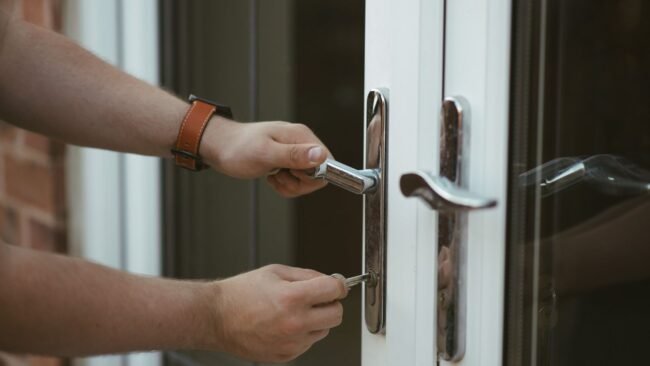
Trusting your landlord and authorized individuals is an inherent part of renting a home. Your landlord and those they allow access should respect your boundaries and property. However, if trust is broken between you and your landlord, there are several options available to you.
There are actually many tenants experiencing these violations of their privacy and feeling unsafe as a result. If you have suffered a violation of your privacy, it is important for you to know your rights. Both one-time incidents and multiple violations will require you to understand how to address the circumstances in question. This article will provide you with an explanation of how to define a violation of your privacy and what steps to take in order to protect yourself in the future.
What is the Right to Quiet Enjoyment?
Leases are not simply rented buildings but an agreement of what you are paying for, so that you may be able to peacefully enjoy living at your residence. Quiet enjoyment is a legal right to live in your rental without harassment, interference, or trespass by your landlord.
Despite how it sounds, it has nothing to do with noise levels, but rather is a promise from your landlord that they will not interfere in your day-to-day life as a tenant in the apartment building.
Although the right to quiet enjoyment is implied in most rental leases, it is expected to be respected by both the renter and the landlord. Communicate regularly with a proactive Texas property management team to help prevent schedule conflicts. When you rent an apartment, it becomes your home for the term of your rental agreement, whereas the landlord owns the building.
You should think of the quiet enjoyment of a rental unit as the extension of an imaginary line at your front door. As a tenant, you have the right to enjoy your home as long as there is no valid notice or cause for your landlord to cross that line. It is both inappropriate and illegal for your landlord to enter into your home without proper notice or a valid reason.
Why Property Notice and Lawful Entry Matter in Landlord-Tenant Relationships?

Entry into a rental unit can be a major source of disagreement between landlords and tenants. Did the landlord provide adequate notice before entering your home? While this may seem like a small issue, it can be more serious legally.
For non-emergency situations, landlords generally must provide 24 to 48 hours’ notice before entering a rental unit, including routine inspections, repairs, showing units to prospective renters, and any other non-emergency visit. There is a very simple reason for this rule: because you live there, your schedule, your privacy, and your sense of security all count. Routine apartment inspections must be conducted according to the schedule stated in the notice.
When landlords fail to perform this step, it moves from an innocent misunderstanding to a possible violation of the law. Repeated no-notice entries by your landlord could allow you to break your lease and move out without penalty, make a formal complaint against the landlord, or take legal action, depending on where you live. Landlords benefit from having notice requirements, which provide a log for documenting entries and decreasing the risk of disputes. In the end, an appropriate entry involves more than just being polite. The law takes this limit seriously, and you should too.
When Does Unauthorized Entry Become Harassment?
If a landlord has entered your home without proper notice on one occasion, that may be an oversight. However, it completely enters a new territory when it becomes frequent or seems deliberate. It’s more than just a notice violation at that point, and it can be considered harassment under the law.
Landlord harassment through unauthorized entry usually follows a pattern. They may show up unannounced every few days, entering while you’re away without telling you, or timing visits in ways that feel designed to unsettle or pressure you. Sometimes it’s tied to a bigger agenda, such as pushing you out of the unit, retaliating against you for filing a complaint, or intimidating you into silence about a maintenance issue.
Intent and repetition will help you determine whether you have been a victim of unlawful abuse. For example, a landlord entering your unit without notice during a real emergency situation is considered an acceptable entry and is protected under the law. However, a landlord who treats your property as if they still have free access to it, lease or no lease, is going too far, as the law recognises. Trust your gut if it seems to be a pattern. Take it seriously right away and keep a record of everything.
Property Manager’s Role in Preventing Privacy Issues
When an apartment is managed by a rental property management company rather than an owner, the security measures for entering your unit should also reflect this. A rental property manager acts as the intermediary between the landlord and the tenant, and they are responsible for being sure that the proper processes are in place for staff, contractors, and landlords to gain access to tenants’ apartments.
This means that every time someone wants to access a leased apartment, the rental property management company is responsible for scheduling the visit or notifying the tenant in advance. If a property manager is doing their job correctly, very few instances of unauthorized access to a tenant’s apartment would occur. Knowing all these will enable you to file a complaint if your complaint was previously ignored by management or your landlord.
Final Thought
Your space should belong to you, not living in somebody else’s home on their rules. Privacy violations and unauthorized entry are unpleasant, and in many cases, you don’t have to put up with them silently.
If something feels wrong to you, begin documenting everything and communicating in writing. Also, do not hesitate to escalate concerns if the situation does not improve. You signed a lease, which means you have rights worth defending. It’s important to know and exercise those rights and not let anyone make you feel like you are overreacting by speaking up.