
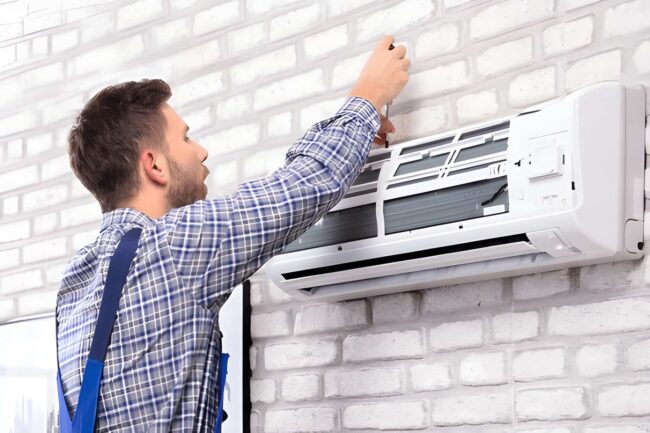
Few household problems are more frustrating during hot weather than an air conditioner that runs constantly without properly cooling your home. Many times, homeowners may notice warm air coming from vents, uneven temperatures throughout different parts of the house, or an AC unit that never seems to shut off. Air conditioner problems can develop for a number of reasons, ranging from simple airflow restriction to more serious mechanical failure. Understanding the most common causes can help homeowners recognize when they need to call in an HVAC professional.
Dirty Air Filters
One of the most frequent reasons an air conditioner struggles to cool properly is a dirty air filter. Filters collect dust, dirt, pet hair, and airborne particles over time, and when they become clogged, airflow is restricted throughout the whole system. Reduced airflow creates several problems:
- Less cool air reaches living spaces
- HVAC system works harder than necessary
- Evaporator coils can freeze
- Energy efficiency decreases
- Indoor comfort is compromised
Many homeowners underestimate how quickly filters become dirty, especially in homes with pets or high levels of dust. Regularly replacing the air filter is one of the simplest ways to keep your HVAC performing as it should.
Low Refrigerant Levels
Refrigerant plays a critical role in removing the heat from your house, so if refrigerant levels become low due to leaks, the air conditioner may continuously run without effectively cooling your home. Signs of refrigerant problems include:
- Warm air blowing from vents
- Ice buildup on refrigerant lines
- Hissing sounds near the unit
- Longer cycles
- Increased indoor humidity
Refrigerant issues typically require professional diagnosis and repair, since leaks have to be located and fixed before the system is recharged.
Thermostat Malfunctions
Sometimes the problem isn’t the AC itself but the thermostat controlling it. A malfunctioning thermostat may incorrectly detect indoor temperatures or fail to properly communicate with the HVAC system, often as a result of:
- Incorrect temperature calibration
- Dead batteries
- Faulty wiring
- Poor placement (too close to windows or heat sources)
- Outdated equipment
Even minor thermostat errors can cause the AC to run inefficiently or reduce its ability to maintain the desired temperature.
Dirty Condenser Coils
The outdoor condenser unit releases heat after it is removed from the home, but over time, dirt, leaves, grass clippings, and debris can accumulate around the coils, which can then no longer transfer heat effectively. When condenser coils become dirty:
- Cooling efficiency drops
- Systems run longer
- Energy usage increases
- Components experience extra strain
Outdoor units require adequate airflow all around and must remain free of excessive debris buildup.
Ductwork Leaks and Air Loss
In some homes, cooled air never fully reaches living spaces because it escapes through damaged ductwork. Small gaps or disconnected ducts can waste significant amounts of cooled air before it ever gets to the vents. Leaky ducts often go unnoticed because they are hidden behind walls, ceilings, or attic spaces but can lead to issues like:
- Hot and cold spots throughout the house
- Weak airflow from vents
- Higher utility bills
- Longer cooling cycles
Frozen Evaporator Coils
Air conditioners rely on evaporator coils to absorb heat from indoors, so if airflow becomes restricted or refrigerant levels drop too low, these coils may freeze and prevent the system from cooling properly. If ignored, this can eventually cause compressor damage. Reduced airflow or visible ice around the indoor units are signs of this issue, which can be a result of dirty filters, blocked vents, low refrigerant, or problems with the blower motor.
Restoring Reliable Cooling Performance
An air conditioner that runs without cooling properly often signals an underlying problem that needs to be addressed. While some issues are relatively minor, others can place significant strain on your HVAC system and increase the risk of a major breakdown. Routine maintenance, regular filter replacement, and prompt attention to performance changes can help prevent cooling problems from worsening and extend the life of your HVAC system.