
Spring is a season of renewal—fresh paint colors, open windows, and more time outside. But for many homeowners, spring also brings an unwelcome surprise: the outdoor surfaces around the house can look noticeably worse after winter. And when family life gets active again, everyday activities can quietly wear down the appearance of exterior siding.
That’s why soft washing for residential siding is essential. It helps restore the look of your home while removing the grime, mildew, and organic buildup that accumulate over time—without the aggressive blasting that can cause damage.
In this article, we’ll break down what’s happening to your siding, why curb appeal matters, and how soft washing keeps your home looking clean, bright, and well cared for.
The Real Reason Siding Looks Dull in Spring
Most people don’t realize that outdoor grime builds up gradually. In colder months, your siding is exposed to moisture, condensation, and fluctuating temperatures. Over time, this creates the ideal conditions for mildew, algae, and mold spores to settle.
Then spring arrives—and so does more foot traffic.
Think about what happens in an active household during family sports season:
- Muddy cleats and wet gear make quick contact with entryways and nearby areas
- Sports gear traffic increases movement near porches and side doors
- Spilled drinks drip and leave sticky spots that attract dirt
- Chalk from practices or backyard games can smear and cling to outdoor surfaces
- Increased foot traffic means more dust, grit, and small particles get tracked close to the home
Even when these messes aren’t directly splashed onto your siding every day, the overall increase in activity often leads to more dirt accumulation around the exterior. That dirt can trap moisture and speed up discoloration. The result: siding can start to look gray, greenish, or uneven—especially in shaded areas.
What “Soft Washing” Actually Does
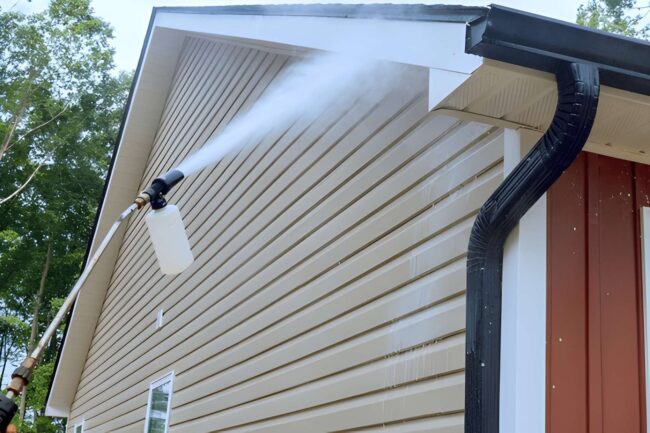
Soft washing for residential siding is a cleaning approach that uses low-pressure water combined with specialized cleaning solutions to lift and remove buildup.
Unlike high-pressure methods that rely on force, soft washing is designed to be gentle while still being effective. The goal is to:
- Break down grime and organic growth (like mildew and algae)
- Lift stains from the siding surface
- Rinse everything away safely
Because it’s lower pressure, it’s typically better suited for siding materials that can be vulnerable to surface wear or water intrusion when cleaned too aggressively.
Why Curb Appeal Depends on the Condition of Your Siding
Curb appeal isn’t only about landscaping or a freshly cleaned driveway. Many people judge the condition of a home immediately when they see the exterior walls. If the siding looks stained or dirty, it can create a “neglected” impression—even if your yard is beautiful.
Soft washing improves curb appeal by:
- Restoring the siding’s original color and contrast
- Reducing streaks and discoloration
- Making the home look cleaner and newer
- Helping remove the buildup that causes patches to darken over time
And when your home looks better from the street, it often changes the way you feel about coming home—because the entire property looks maintained.
Pressure Washing vs. Soft Washing: Why the Difference Matters
Homeowners often hear the term “pressure washing” and assume more force is always better. But siding is not like a concrete sidewalk. Siding materials have finishes and joints designed for weather protection—not for direct blasting.
Pressure cleaning can sometimes push water where it shouldn’t go, contribute to premature wear, or cause cosmetic damage—especially if the nozzle is too close, the pressure is too high, or the surface is cleaned repeatedly.
In contrast, soft washing for residential siding focuses on cleaning effectiveness with gentler application, which helps protect the siding’s appearance and performance.
For example, guidance on vinyl siding cleaning commonly emphasizes gentle, careful methods rather than aggressive blasting. JLC Online’s field guide notes that vinyl siding cleaning typically uses soft-bristle brushes and appropriate cleaners rather than harsh scrubbing or pressure tactics.
BobVila similarly cautions homeowners about pressure washing vinyl siding and highlights the risk of discoloration or damage when pressure is misused.
Additionally, Vinyl Siding Institute-style recommendations (as reflected in associated published guidance documents) generally align with soft-brush, careful cleaning practices.
(Key takeaway: the safest “cleanest-looking” result usually comes from using the right method for the material.)
A Simple Spring Checklist: Signs You Need a Soft Wash
If you see any of the following, your siding likely needs attention:
- Green, black, or brown streaks (often from organic growth)
- Dark patches that don’t improve after rain
- Uneven fading, especially under shaded areas
- Rough-to-the-touch grime buildup
- Staining that makes your home look older than it is
Even if your siding isn’t “damaged,” buildup can reduce the fresh look you expect after winter. Soft washing helps address that cosmetic problem before it becomes harder to remove later.
How Families Accidentally Wear Down Outdoor Surfaces
Active households unintentionally stress exterior surfaces every spring. Here’s how it happens:
- Muddy cleats track moisture and soil that can cling near entry points and under eaves
- Sports gear traffic increases the movement of dust and grit close to the home
- Spilled drinks can leave residue that grabs airborne dirt
- Chalk can smear and create fine particles that blend into dirt layers
- Increased foot traffic pushes more outdoor dust against siding edges and corners
Over time, these smaller events add up. Instead of one big “mess,” you get continuous, light contamination—exactly the kind that contributes to dullness and streaking.
When to Refresh High-Traffic Areas (Casual Tip: Think “Pressure Washing” for Certain Zones)
After sports season ramps up, many homeowners want to refresh the areas that take the most wear. While siding benefits from gentle cleaning, other exterior zones—like certain hard surfaces around the property—may be able to handle more force.
So yes, it’s common for families to also use pressure washing services casually as a way to refresh high-traffic areas such as:
- Entry paths and concrete walkways
- Driveways and garage floors
- Outdoor steps where mud accumulates
The smart approach is to match the method to the surface—soft washing for delicate siding, and pressure washing only where appropriate.
The Benefits of Choosing Soft Washing for Residential Siding
Homeowners choose soft washing for residential siding because it delivers practical results, including:
- Improved appearance without harsh impact
- Reduced buildup that causes discoloration
- A cleaner, brighter exterior that supports curb appeal
- A more “maintained” look after spring activity
Most importantly, it helps your home look like it’s ready for the season—because it is.
Conclusion: Spring Looks Better When Your Siding Looks Fresh
Family sports season brings energy, fun, and more time outdoors. But it also brings muddy cleats, chalk, spilled drinks, and more foot traffic—details that quietly contribute to springtime grime buildup.
That’s exactly why soft washing for residential siding is essential for curb appeal. It’s a safer, more targeted way to remove staining and organic growth while keeping the siding’s finish protected.
When you refresh your siding the right way, your home doesn’t just look cleaner—it looks cared for. And that’s the real goal of great curb appeal.