
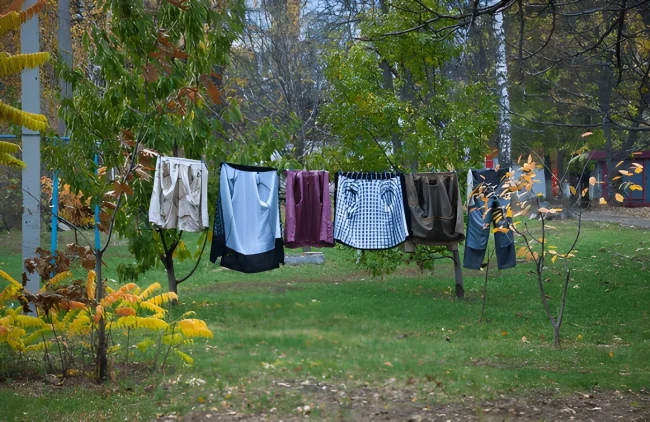
There is a distinct, rhythmic rhythm to summer laundry. You throw a load into the washing machine, wait for the chime, and step outside into the warm sunlight with a basket full of damp clothes. Pinning sheets, t-shirts, and denim to a backyard clothesline feels productive, almost therapeutic. Crisp autumn breeze and natural sunlight do all the work, leaving your linens smelling genuinely fresh while keeping your energy bills pleasantly low.
Then, almost overnight, the weather turns.
The bright, dry days of late summer give way to the unrelenting fall rain. Dew stays on the grass until noon, humidity lingers in the air, and grey skies take over the forecast. Suddenly, leaving a rack of damp jeans outdoors means returning hours later to find them soaked through by an unexpected drizzle.
Just like that, line drying season is officially over.
Transitioning from outdoor solar drying to an all-indoor autumn laundry system can throw even the most organized households into chaos. Clothes take twice as long to dry, drying racks take over living spaces, and family members suddenly compete for time in front of the clothes dryer.
Adapting your laundry routine to the rainy season requires strategy, spatial awareness, and a bit of appliance care. Here is how to navigate the post-line-drying blues, keep your home free of damp odors, and ensure your fall laundry transition runs smoothly.
1. The Indoor Air-Drying Strategy: What Works and What Doesn’t
When rainy weather pushes your laundry operations indoors, your first instinct might be to unpack every folding rack you own and set them up in the living room. However, indoor air drying in fall is very different from outdoor line drying in summer.
Without direct sunlight and outdoor airflow, indoor air drying relies heavily on indoor humidity and circulation. If you aren’t selective about what you hang, your home can quickly start to feel like a humid sauna, and your clothes may take so long to dry that they develop a sour, musty smell.
What Can (and Should) Still Air Dry Indoors
Even during the wet autumn months, air drying indoors is beneficial for delicate garments that are susceptible to heat damage, shrinking, or fading:
- Delicates & Synthetic Activewear: Leggings, sports bras, and technical fabrics dry quickly because they hold very little water. Hanging them indoors on a small drying rack won’t saturate your indoor air with excessive moisture.
- Wool Sweaters & Knits: Heavy autumn knits should never go in the dryer, nor should they be hung vertically on a line where they might stretch out of shape. Reshape wool sweaters and lay them flat on a drying mesh rack or clean towel.
- Button-Down Shirts & Blouses: Hanging these on plastic hangers from a shower rod or drying rack allows them to dry relatively fast while minimizing wrinkles.
What Needs to Move to the Machine
Heavy fabrics that retain significant water are poor candidates for indoor air drying during rainy fall months.
- Bath Towels & Robes: Thick cotton bath towels trap massive amounts of moisture. When hung in an enclosed indoor space during rainy weather, they can take up to 36 hours to dry completely—creating an ideal breeding ground for mildew.
- Denim & Heavy Canvas: Jeans and heavy canvas jackets take far too long to dry indoors without active heat and high airflow.
- Bed Sheets & Duvet Covers: While you can hang a sheet over an interior door, doing so blocks air movement, increases room humidity, and often leaves damp spots in the folded seams.
2. The Art of Managing Drying Racks (Without Cluttering Your Home)
One of the biggest friction points when switching from outdoor to indoor drying is space management. Outdoors, line space is virtually unlimited; indoors, drying racks rapidly consume floor space in bedrooms, hallways, and living rooms.
To prevent drying racks from hijacking your home decor and creating visual chaos, follow these spatial drying guidelines:
Give Racks Room to Breathe
The single biggest mistake people make with indoor drying racks is overcrowding them. Packing garments tightly together on a folding rack starves them of airflow. Instead of drying in 6 to 8 hours, clothes remain damp for a full day.
- Leave Empty Bars: Leave at least one empty rung or space between thick garments.
- Alternate Long and Short Items: Hang short items like socks and underwear next to long items like pants to allow air to pass beneath shorter garments.
- Use Hangers on the Perimeter: Hang shirts on plastic hangers along the outer frame of the rack. This opens up the interior bars for items that must lie flat and doubles your rack capacity without crushing garments together.
Optimize Placement for Airflow
Where you place your drying rack matters just as much as how you pack it. Never tuck a damp drying rack into an enclosed, unventilated closet or a small windowless bathroom.
Instead, place racks in rooms with good ventilation—near an open interior doorway or under a ceiling fan set to a low speed. If your house tends to trap moisture during rainy weeks, positioning a portable dehumidifier near your drying rack is a game-changer. The dehumidifier actively pulls moisture out of the air (and out of the clothes), cutting drying times by more than half while preventing damp air from lingering in your living space.
3. Machine-Drying Heavy Lifters: Scheduling and Efficiency
Once rainy fall weather arrives, your automatic clothes dryer transitions from an occasional backup option to the primary engine of your household’s laundry system. When bulky items like jeans, heavy sweatshirts, bath towels, and bedding all hit the dryer at once, bottlenecking is almost inevitable.
Stagger Your Loads by Fabric Weight
Throwing lightweight cotton t-shirts in the same load as thick bath towels or heavy denim jeans is a recipe for inefficiency. The lighter items dry quickly but continue tumbling—wasting energy and over-drying the fabric—while waiting for the heavy towels to lose their moisture.
- Group by Density: Run heavy cottons (towels, sweatshirts, sweatpants) together in one load, and lightweight synthetic or thin cotton blends in another.
- Balance Load Sizes: Avoid the temptation to cram as much as possible into the drum. A dryer needs space for air to circulate through the fabrics. Overloaded dryers trap moisture in the center of the bundle, leaving you with damp seams even after a full cycle.
Establish a Fall Family Laundry Schedule
When multiple family members transition from air drying to machine drying, laundry room traffic quickly peaks. Avoid weekend laundry jams by establishing a consistent weekday schedule:
- Dedicated Towel & Linen Days: Pick one specific mid-week day (e.g., Wednesday evening) strictly for sheets and bath towels.
- One Load a Day Routine: Rather than saving 6 loads for Sunday, run one small, specific load every morning or evening.
- Use the High-Speed Spin Cycle: Before transferring clothes from the washer to the dryer, ensure your washing machine utilizes its highest spin speed setting. Extracting as much water as possible during the wash cycle significantly reduces dryer run times and energy consumption.
4. Preparing Your Appliances for the Heavy Fall Workload
During the late spring and summer months, your dryer likely enjoyed a quiet period while the outdoor clothesline handled the heavy lifting. Now that rainy autumn days require frequent dryer cycles, putting an unmaintained appliance directly into heavy service can lead to performance issues, higher energy bills, or safety hazards.
Before relying on your clothes dryer every day, perform a quick check-up:
Clear the Built-In Lint Screen Every Time
It sounds basic, but lint accumulation is the primary cause of sluggish drying performance. Clean the lint screen before or after every single load. A thin layer of lint severely restricts exhaust airflow, forcing your machine to run longer and hotter to dry the same amount of clothes.
Inspect and Clean Dryer Vents
While cleaning the lint filter inside the drum is part of a standard daily routine, the internal lint screen captures only a portion of the debris generated during a cycle. Finer lint particles pass through the filter and travel down into the exhaust ductwork leading outside your home.
Over months of heavy use, lint builds up inside these duct walls, restricting exhaust airflow and trapping moisture inside the machine. If your clothes suddenly take two or three cycles to dry fully, or if the top of the machine feels unusually hot to the touch, a clogged vent line is likely the culprit. Beyond increasing energy costs and wearing out appliance components prematurely, lint build-up inside exhaust vents poses a significant home safety hazard.
When transitioning your home appliances into high-use seasons, scheduling professional maintenance ensures everything operates safely and efficiently. Homeowners looking to protect their appliances and maintain home efficiency before winter can book residential dryer vent cleaning in Emmaus to clear accumulated debris, maximize airflow, and reduce laundry drying times.
5. Embracing the Autumn Laundry Transition
While losing the convenience of outdoor line drying can feel like a nuisance, transitioning your laundry routine for fall doesn’t have to be overwhelming.
By strategically choosing which items to air dry indoors, setting up drying racks to optimize airflow, staggering machine loads by fabric weight, and keeping your dryer’s exhaust system clean and clear, you can easily maintain an efficient rhythm all season long.
When the rain settles in outside, a well-managed indoor laundry system keeps your wardrobe fresh, protects your favorite autumn knits, and ensures warm, dry clothes are always ready when you need them.Read more at https://myflashyhome.com/