
Keeping your home comfortable throughout the year often starts with proper insulation. When temperatures rise or fall, poor insulation allows heat to move through walls, ceilings, and other building surfaces. Your heating and cooling systems then work harder to maintain comfortable indoor temperatures.
Spray foam insulation offers an effective solution for reducing unwanted heat transfer and sealing air leaks. Yet homeowners often face one important question. Which type of spray foam works best for their property?
Understanding open cell vs closed cell spray foam helps you compare insulation performance, moisture resistance, installation costs, and long-term benefits. Each option serves different purposes, so choosing the right material depends on your home’s structure and insulation needs.
What Are the Different Types of Spray Foam Insulation?
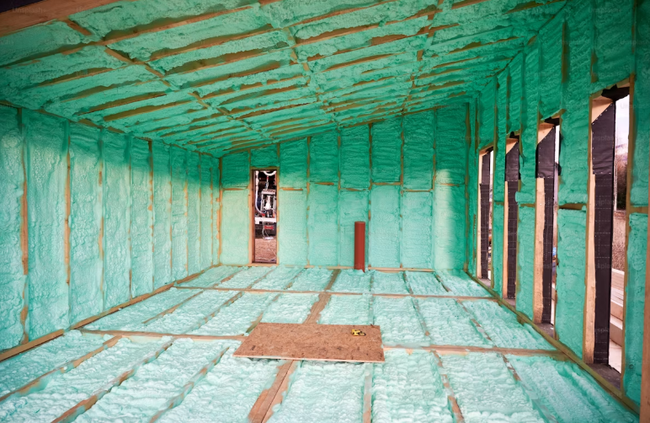
Spray foam insulation consists of liquid components which react and expand after application. The expanding material fills gaps and creates an insulating layer across building surfaces.
Two main types of spray foam insulation serve residential properties.
What Is Open Cell Spray Foam Insulation?
Open cell spray foam insulation features a lightweight structure with tiny cells which remain partly open. The material expands significantly during installation, filling irregular spaces and small openings.
Its flexible structure makes open-cell foam suitable for interior walls, ceilings, and certain attic assemblies.
What Is Closed Cell Spray Foam Insulation?
Closed cell spray foam insulation contains tightly packed cells which form a dense, rigid material.
This structure provides greater thermal resistance per inch and lower water vapor permeability than open-cell foam.
Contractors often select closed-cell insulation for areas with limited installation space or specific moisture-control requirements.
What Is the Difference Between Open Cell and Closed Cell Spray Foam?
The difference between open cell and closed cell spray foam involves more than density. Both materials provide insulation and air sealing, although their performance characteristics differ.
Insulation R-Value and Thermal Performance
R-value measures resistance to heat flow. Higher values indicate greater thermal resistance.
Typical spray foam insulation R-value ranges include:
Open-cell spray foam provides approximately R-3.5 to R-3.8 per inch, while closed-cell spray foam provides approximately R-6 to R-7 per inch.
For example, three inches of open-cell foam with an R-value of 3.7 per inch provides approximately R-11.1. Three inches of closed-cell foam rated R-6.5 per inch provides approximately R-19.5.
Actual performance depends on product specifications, thickness, and installation quality.
Moisture Resistance and Air Sealing
Both insulation types reduce air movement when installers apply sufficient thickness.
Closed-cell foam offers greater resistance to water vapor movement, making moisture management an important consideration during material selection.
Open-cell foam allows more vapor movement. This characteristic requires careful evaluation in roof assemblies, crawl spaces, and other moisture-sensitive areas.
Soundproofing and Structural Properties
Open-cell foam absorbs airborne sound effectively, making the material useful for reducing noise transmission between rooms.
Closed-cell foam provides greater rigidity and contributes stiffness to certain building assemblies.
Neither material guarantees complete soundproofing.
Installation Costs and Long-Term Value
Closed-cell insulation generally costs more because of higher material density and installation requirements.
Open-cell foam often provides a more economical option for filling larger cavities.
Before comparing quotes, request pricing based on equivalent insulation performance rather than thickness alone.
For homeowners evaluating installation options, consulting experienced spray foam insulation contractors in Central Georgia such as Elite Coatings & Insulation LLC helps establish appropriate insulation requirements based on building conditions and project specifications.
What Are the Benefits of Open Cell and Closed Cell Spray Foam Insulation?
Each insulation material offers distinct advantages. Understanding these benefits helps you match insulation performance with your property’s requirements.
Key Open Cell Spray Foam Benefits
Open cell spray foam benefits include flexibility, substantial expansion, and sound absorption.
The material works well in suitable interior applications where available cavity depth accommodates the required insulation thickness.
Its lower material cost also makes open-cell foam worth considering for larger residential insulation projects.
Key Closed Cell Spray Foam Benefits
Closed cell spray foam benefits include higher R-value per inch, reduced water vapor transmission, and greater rigidity.
These properties make closed-cell foam useful where cavity space is limited or the assembly requires specific moisture-control performance.
The higher initial investment requires evaluation against project requirements and expected energy savings.
Which Is the Best Spray Foam Insulation for Your Home?
Choosing the best spray foam insulation depends on where you plan to install the material.
Your local climate, available space, building design, and budget all influence the decision.
Choosing Spray Foam for Attics and Rooflines
Attic insulation requires careful attention to roof ventilation, moisture movement, and thermal performance.
Open-cell foam suits certain roof assemblies where sufficient insulation depth exists.
Closed-cell foam provides higher thermal resistance within thinner spaces.
A qualified professional should assess roof construction before recommending either material.
Choosing Spray Foam for Walls and Crawl Spaces
Interior walls often benefit from open-cell foam because of its expansion and sound absorption.
For homeowners considering this application, speaking with open cell spray foam insulation contractors in Central Georgia provides an opportunity to assess wall cavities, installation thickness, and insulation requirements.
Crawl spaces require additional consideration. Ground moisture, ventilation conditions, and existing vapor barriers influence material selection.
Closed-cell foam often suits specific crawl space applications, although proper drainage and moisture management remain essential.
Why Professional Installation Matters
Spray foam insulation requires correct preparation, application, and curing procedures.
Experienced installers evaluate surface conditions, insulation thickness, ventilation requirements, and product specifications before beginning work.
Improper installation leads to gaps, uneven coverage, or moisture problems.
Ask contractors about their training, product documentation, safety procedures, and applicable building code requirements.
Frequently Asked Questions About Spray Foam Insulation
Is open-cell spray foam cheaper than closed-cell foam?
Open-cell foam generally has lower material costs. Total project pricing depends on installation thickness, required R-value, labor, and surface conditions.
Which spray foam offers better energy efficiency?
Closed-cell foam provides higher thermal resistance per inch. Overall energy performance depends on insulation coverage, air sealing, and the building’s thermal design.
How long does spray foam insulation last?
Properly installed spray foam generally provides long-term insulation performance. Service life depends on product quality, environmental exposure, and building conditions.
Open Cell vs Closed Cell Spray Foam: Which Should You Choose?
The right insulation choice depends on your home’s construction, moisture conditions, and energy efficiency goals.
Open-cell foam offers flexibility, sound absorption, and lower upfront material costs. Closed-cell foam delivers higher thermal resistance per inch and greater resistance to water vapor movement.
Start by identifying areas with inadequate insulation or noticeable air leaks. Review your existing insulation, assess moisture concerns, and determine the required R-value for each space.
Then request a professional insulation assessment and compare recommendations based on performance, installation requirements, and total project costs.
A careful spray foam insulation comparison helps you select suitable materials, improve indoor comfort, and support long-term household energy efficiency. Read More at Myflashyhome