
Indoor days do not have to mean hours of screen time or repeated complaints about boredom. With a few basic supplies and a little preparation, families can create engaging indoor activities that combine movement, creativity, storytelling, problem-solving, and quiet play.
The best indoor activities for kids are simple enough to start without a major setup. They should also match the child’s age, available space, energy level, and attention span. A preschooler may enjoy sticker art or a short movement game, while an older child may prefer designing a board game, testing paper airplanes, or building a detailed cardboard structure.
This guide includes 15 screen-free activities for rainy days, school breaks, quiet afternoons, and family time. Each activity includes suggested ages, estimated time, materials, instructions, safety guidance, and ideas for adjusting the challenge.
Adult supervision should always reflect the child’s age and abilities. The goal is not to produce a perfect finished project. It is to give children a safe and enjoyable opportunity to create, move, explore, and make independent choices.
Indoor Activities at a Glance
| Activity | Suggested age | Time | Energy level | Mess level | Adult help |
|---|---|---|---|---|---|
| Paper-bag puppet | 4+ | 20 minutes | Low | Low | Cutting |
| Indoor obstacle course | 4+ | 20–30 minutes | High | Low | Setup |
| Cardboard building challenge | 5+ | 30 minutes | Medium | Low | Minimal |
| Finish-the-story game | 4+ | 15 minutes | Low | None | Participation |
| Balloon volleyball | 4+ | 15 minutes | High | None | Supervision |
| Sticker mosaic art | 3+ | 15 minutes | Low | Low | Supervision |
| Sink-or-float experiment | 5+ | 20 minutes | Low | Medium | Required |
| Indoor scavenger hunt | 4+ | 20 minutes | Medium | None | Setup |
| Reading fort | 4+ | 30 minutes | Low | Low | Setup |
| Sock sorting race | 3+ | 10 minutes | Medium | None | Minimal |
| Paper airplane test | 6+ | 25 minutes | Medium | Low | Folding help |
| Family board game | 7+ | 45–60 minutes | Low | Medium | Guidance |
| Nature or magazine collage | 4+ | 25 minutes | Low | Medium | Supervision |
| Dance-and-freeze game | 3+ | 15 minutes | High | None | Supervision |
| Drawing prompt jar | 4+ | 15–30 minutes | Low | Low | Minimal |
Times are estimates. Children may spend longer on activities they particularly enjoy.
Safety Rules Before Starting
Choose Age-Appropriate Materials
Read labels before giving children paint, glue, markers, clay, or other art supplies. Use products intended for children and follow all manufacturer warnings.
Avoid assuming that a product is safe simply because it is sold in a craft section.
Keep Small Parts Away From Young Children
Beads, buttons, googly eyes, small stickers, magnets, and similar pieces can create choking risks for younger children.
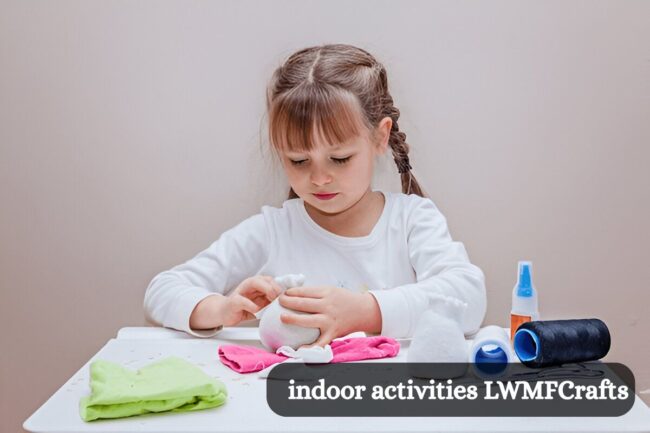
For children under three, use large paper shapes, chunky crayons, wide tape, and other materials that cannot fit easily inside the mouth.
Use Safety Scissors
Young children should use rounded, age-appropriate scissors with supervision.
Adults should complete difficult cutting, especially when working with thick cardboard, plastic packaging, fabric, or materials with sharp edges.
Reserve Sharp and Hot Tools for Adults
Hot-glue guns, craft knives, staplers, hole punches, sharp wire, and similar tools should be handled by adults or used only under close age-appropriate supervision.
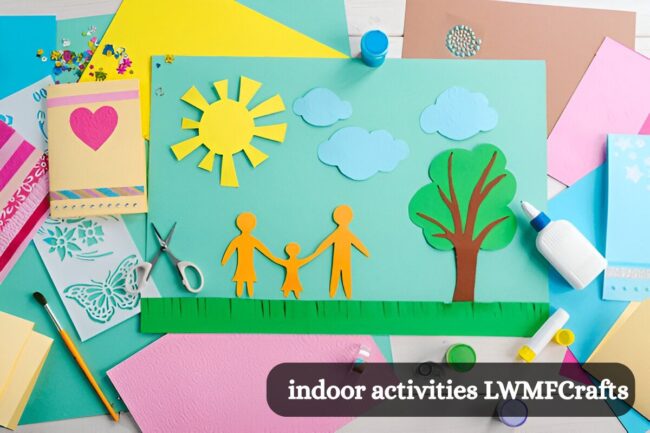
Children should never be asked to make holes in cans, plastic containers, or hard materials with sharp tools.
Protect Floors and Furniture
Use a washable table covering, old sheet, or reusable craft mat for activities involving paint, water, glue, or natural materials.
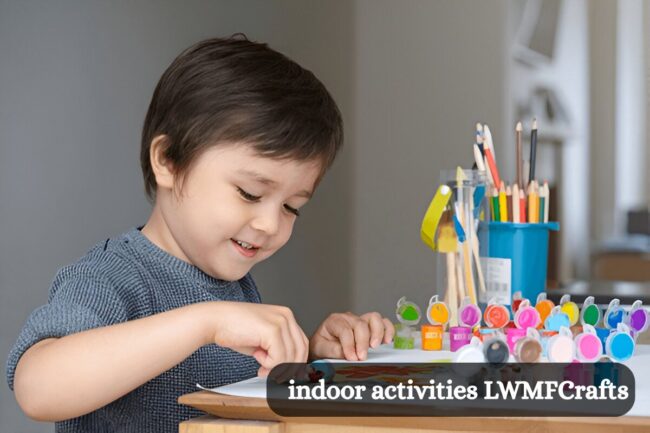
Keep wet projects away from upholstered furniture, electronics, and important papers.
Supervise Movement Games
Clear the floor before obstacle courses, balloon games, and dancing.
Remove breakable objects, secure loose rugs, and make sure children have enough room to move without hitting furniture, doors, or one another.
Wash Hands After Crafts and Experiments
Children should wash their hands after handling paint, glue, soil, leaves, recycled packaging, or experiment materials.
Craft supplies should not be used for eating or drinking unless they are specifically intended for food use.
Set Up an Indoor Activity Station
A simple activity station makes indoor play easier to begin and clean up.
Prepare:
- A washable table covering
- One tray for each child
- A small waste bowl
- A damp cloth or paper towels
- A container for reusable scraps
- A drying area for wet projects
- A box for unfinished work
- A separate container for adult-only tools
Keep a small selection of supplies available rather than placing everything on the table at once. Too many choices can make it harder for younger children to begin.
A basic supply box might include:
- Construction paper
- Plain paper
- Washable markers
- Crayons
- Glue sticks
- Safety scissors
- Painter’s tape
- Stickers
- Cardboard
- Yarn
- Paper bags
- Recycled boxes
End each activity with a five-minute cleanup routine so putting materials away becomes part of the process.
15 Indoor Activities for Kids
1. Paper-Bag Character Puppets
Suggested age: 4+
Time: About 20 minutes
Energy level: Low
Mess level: Low
Materials
- Plain paper lunch bag
- Construction paper
- Washable markers or crayons
- Glue stick
- Yarn
- Large paper shapes
- Safety scissors
Instructions
- Place the paper bag flat with the folded bottom facing upward.
- Use the folded section as the puppet’s face.
- Draw eyes, a nose, and a mouth with markers.
- Cut ears, hair, clothing, or other features from construction paper.
- Attach the pieces with a glue stick.
- Place a hand inside the bag and move the folded section like a mouth.
Safety
Adults should help younger children with detailed cutting. Avoid small decorative parts when working with children under three.
Easier Variation
Provide pre-cut paper shapes that the child can arrange and glue.
Older-Child Challenge
Ask the child to create a character with a name, personality, and short puppet-show script.
2. Indoor Obstacle Course
Suggested age: 4+
Time: 20–30 minutes
Energy level: High
Mess level: Low
Materials
- Pillows
- Painter’s tape
- Cardboard boxes
- Chairs
- Soft balls
- Laundry basket
Instructions
Create a safe route that may include:
- Walking along a taped line
- Crawling under a table
- Stepping around pillows
- Tossing a soft ball into a basket
- Carrying a lightweight object to the finish
- Balancing briefly on one foot
Let children complete the course without timing first. Add a timer only when competition remains positive and safe.
Safety
Remove sharp, heavy, unstable, or breakable objects. Do not place obstacles near stairs, glass tables, or hard corners.
Easier Variation
Use three simple stations with wide spaces between them.
Older-Child Challenge
Ask older children to design the course and write instructions for other family members.
3. Cardboard Building Challenge
Suggested age: 5+
Time: About 30 minutes
Energy level: Medium
Mess level: Low
Materials
- Small cardboard boxes
- Cardboard tubes
- Painter’s tape
- Paper
- Washable markers
- Child-safe scissors
Instructions
Give the child a simple building challenge, such as:
- Build the tallest tower
- Design a home for a toy
- Create a bridge for a small car
- Build a castle
- Create an animal shelter
Encourage the child to plan before taping the pieces together.
Safety
Adults should prepare thick cardboard and remove staples, sharp edges, plastic film, and dirty packaging.
Easier Variation
Let younger children stack boxes without cutting or taping.
Older-Child Challenge
Add a rule such as building a bridge that can hold three books or a tower that stands for 30 seconds.
4. Finish-the-Story Family Game
Suggested age: 4+
Time: About 15 minutes
Energy level: Low
Mess level: None
Materials
No materials are required, although paper and a pencil may be used to record the story.
Instructions
One person begins with a simple sentence:
“One rainy afternoon, a tiny purple door appeared behind the sofa.”
Each participant adds one or two sentences. Continue until the story reaches a natural ending.
Encourage children to include:
- A main character
- A problem
- An unusual object
- A surprising event
- A solution
Safety
No special safety concerns, but keep the story suitable for the youngest participant.
Easier Variation
Use familiar characters such as animals, toys, or family pets.
Older-Child Challenge
Give the story a required setting, object, and ending.
5. Balloon Volleyball
Suggested age: 4+
Time: About 15 minutes
Energy level: High
Mess level: None
Materials
- One inflated balloon
- Painter’s tape or yarn for a center line
Instructions
- Clear a safe play area.
- Mark a center line on the floor.
- Divide players into two sides.
- Tap the balloon over the line without letting it touch the floor.
- Award points or simply count how many times the balloon stays in the air.
Safety
Use only where balloons are appropriate for the children’s ages. Deflated balloons and broken balloon pieces can be dangerous for young children and should be removed immediately.
Keep play away from ceiling fans, lamps, and breakable items.
Easier Variation
Sit on the floor and tap the balloon back and forth.
Older-Child Challenge
Allow players to use only one hand or require three passes before sending the balloon across the line.
6. Sticker Mosaic Art
Suggested age: 3+
Time: About 15 minutes
Energy level: Low
Mess level: Low
Materials
- Large stickers
- Cardstock or construction paper
- Crayons
- Painter’s tape
Instructions
- Draw a large simple shape, such as a heart, tree, house, or animal.
- Ask the child to fill the shape with stickers.
- Use different sticker colors to create sections or patterns.
- Add drawn details after the mosaic is complete.
Safety
Use large stickers with younger children and supervise closely. Small sticker pieces should be kept away from children who may place them in their mouths.
Easier Variation
Let the child place stickers freely without following an outline.
Older-Child Challenge
Create a color pattern or use tiny paper squares instead of stickers.
7. Simple Sink-or-Float Experiment
Suggested age: 5+
Time: About 20 minutes
Energy level: Low
Mess level: Medium
Materials
- Plastic bowl or container
- Water
- Towel
- Several safe household objects
- Paper and pencil
Possible test objects include:
- Plastic spoon
- Cork
- Small toy
- Leaf
- Coin
- Sponge
- Craft stick
Instructions
- Fill the container partway with water.
- Show one object at a time.
- Ask the child to predict whether it will sink or float.
- Place the object in the water.
- Record the result.
- Discuss whether the prediction was correct.
Safety
An adult should supervise all water activities. Use only clean, safe objects that are too large to swallow. Wipe spills promptly to prevent slipping.
Easier Variation
Test three objects without recording results.
Older-Child Challenge
Ask the child to group objects by material and explain why certain objects may behave differently.
8. Indoor Scavenger Hunt
Suggested age: 4+
Time: About 20 minutes
Energy level: Medium
Mess level: None
Materials
- Written or picture clues
- Small basket or checklist
Instructions
Ask children to find safe objects matching descriptions such as:
- Something soft
- Something round
- Something blue
- Something that starts with B
- Something used in the kitchen
- Something smaller than a hand
- Something with a pattern
Children can point to objects instead of collecting them if moving items would create clutter.
Safety
Set clear boundaries. Exclude kitchens, bathrooms, medicine storage, tools, stairs, and private areas when appropriate.
Easier Variation
Use picture clues.
Older-Child Challenge
Create riddle-style clues or ask the child to design a scavenger hunt for someone else.
9. Build a Reading Fort
Suggested age: 4+
Time: About 30 minutes
Energy level: Low
Mess level: Low
Materials
- Blankets
- Cushions
- Chairs
- Flashlight or battery light
- Books
Instructions
- Choose a safe open area.
- Place chairs or sturdy furniture close together.
- Drape a lightweight blanket over the top.
- Add cushions and books inside.
- Use a battery light rather than candles or hot lamps.
- Spend 15–20 minutes reading inside the fort.
Safety
Do not attach blankets to unstable or heavy objects. Keep fabric away from heaters, lamps, outlets, and open flames. Ensure children can exit easily.
Easier Variation
Create a reading corner with pillows instead of a covered fort.
Older-Child Challenge
Ask the child to create a themed reading list and decorate the entrance with a handmade sign.
10. Sock Sorting and Matching Race
Suggested age: 3+
Time: About 10 minutes
Energy level: Medium
Mess level: None
Materials
- A basket of clean socks
Instructions
- Mix several pairs of socks.
- Ask children to find matching pairs.
- Sort them by color, size, pattern, or family member.
- Count the completed pairs.
- Place them in separate piles.
Safety
Use only clean socks and avoid adding clothing with sharp fasteners.
Easier Variation
Use only three or four pairs.
Older-Child Challenge
Add a timer or ask the child to create categories and explain the sorting method.
11. Paper Airplane Design Test
Suggested age: 6+
Time: About 25 minutes
Energy level: Medium
Mess level: Low
Materials
- Plain paper
- Crayons or markers
- Painter’s tape
- Measuring tape
Instructions
- Fold two or three different paper airplane designs.
- Mark a starting line with tape.
- Predict which design will fly the farthest.
- Fly each plane three times.
- Measure or compare the distances.
- Discuss which folds may have affected the results.
Safety
Fly planes in an open area away from faces, lamps, windows, and fragile items.
Easier Variation
Make one simple plane and decorate it.
Older-Child Challenge
Change one design element at a time and record the effect.
12. Create a Family Board Game
Suggested age: 7+
Time: 45–60 minutes
Energy level: Low
Mess level: Medium
Materials
- Cardboard or poster board
- Paper
- Markers
- Dice
- Small game pieces
- Index cards
- Glue stick
Instructions
- Choose a theme.
- Draw a path across the board.
- Add special spaces such as “move forward,” “miss a turn,” or “draw a card.”
- Write simple rules.
- Make challenge cards.
- Test the game.
- Change confusing rules after playing.
Safety
Avoid small game pieces around young children. Use large paper markers when needed.
Easier Variation
Decorate a simple path game with 20 spaces.
Older-Child Challenge
Add strategy, different player abilities, or a scoring system.
13. Nature or Magazine Collage
Suggested age: 4+
Time: About 25 minutes
Energy level: Low
Mess level: Medium
Materials
- Paper or cardstock
- Glue stick
- Leaves or safe natural materials
- Old magazines
- Safety scissors
- Crayons
Instructions
- Choose a theme such as a garden, animal, face, or imaginary place.
- Cut or tear suitable pictures and shapes.
- Arrange pieces before gluing.
- Attach the largest pieces first.
- Add smaller details and drawings.
Safety
Use clean, dry natural materials. Avoid unknown plants, thorns, moldy leaves, insects, or materials collected near roads or treated areas.
Easier Variation
Use only torn paper and pre-cut pictures.
Older-Child Challenge
Create a collage using a limited color palette or a clear visual message.
14. Dance-and-Freeze Challenge
Suggested age: 3+
Time: About 15 minutes
Energy level: High
Mess level: None
Materials
- Music
- Clear floor space
Instructions
- Play music and let children dance.
- Pause the music at random.
- Everyone must freeze.
- Begin again after a few seconds.
- Add movement prompts such as “dance like a robot” or “move slowly.”
Safety
Clear furniture and loose rugs. Keep volume at a comfortable level. Avoid jumping when the room has low ceilings or hard obstacles.
Easier Variation
Use simple movements such as marching or clapping.
Older-Child Challenge
Let players take turns controlling the music and choosing movement themes.
15. Quiet Drawing Prompt Jar
Suggested age: 4+
Time: 15–30 minutes
Energy level: Low
Mess level: Low
Materials
- Paper
- Crayons or washable markers
- Small container
- Paper prompt slips
Prompt Ideas
- Draw a house on the moon.
- Invent a new animal.
- Design a bedroom for a giant.
- Draw a city under the ocean.
- Create a superhero pet.
- Design a treehouse.
- Draw a machine that cleans your room.
Instructions
- Place prompts inside the container.
- Let the child choose one.
- Set out simple drawing materials.
- Allow the child to interpret the prompt freely.
- Ask about the picture after it is complete.
Safety
Use age-appropriate materials and supervise younger children.
Easier Variation
Give a choice between two spoken prompts.
Older-Child Challenge
Ask the child to add labels, a short story, or a plan explaining how the idea works.
Indoor Activities by Age
Activities for Ages 3–5
Suitable options include:
- Sticker mosaics
- Sock matching
- Dance-and-freeze
- Simple paper-bag puppets
- Easy scavenger hunts
- Drawing prompts
- Balloon tapping with supervision
Use large materials, short instructions, and close supervision.
Activities for Ages 6–8
Suitable options include:
- Cardboard building
- Paper airplanes
- Sink-or-float testing
- Reading forts
- Nature collages
- Story games
- Simple board games
Children in this age group may follow several steps but may still need help with planning and cleanup.
Activities for Ages 9–12
Older children may enjoy:
- Detailed cardboard structures
- Board-game design
- Paper airplane experiments
- Advanced collage work
- Creating scavenger hunts
- Designing obstacle courses
- Writing puppet scripts
Give them greater control over planning, rules, and evaluation.
Whole-Family Activities
Good whole-family choices include:
- Finish-the-story
- Balloon volleyball
- Board-game creation
- Reading forts
- Indoor scavenger hunts
- Dance-and-freeze
- Obstacle courses
Choose activities that allow different ages to participate at different difficulty levels.
Indoor Activities by Energy Level
High-Energy Activities
Use when children need movement:
- Obstacle course
- Balloon volleyball
- Dance-and-freeze
- Scavenger hunt
- Sock sorting race
Calm Table Activities
Use during quieter periods:
- Puppets
- Sticker mosaics
- Collage
- Drawing prompts
- Board-game design
Quiet Independent Activities
Suitable choices include:
- Drawing prompt jar
- Sticker art
- Reading fort
- Simple collage
- Cardboard building
Independent play should still include age-appropriate supervision.
Parent-and-Child Activities
Activities that work well together include:
- Storytelling
- Science testing
- Board-game creation
- Paper airplane testing
- Puppet shows
- Reading forts
How to Encourage Independent Play
Offer two or three activity choices instead of asking an open-ended question.
Keep instructions short and visible. Younger children may benefit from picture instructions or a completed example.
Allow children to make design choices rather than correcting every color, shape, or decision. Praise effort, planning, and persistence instead of comparing the result with the sample.
Start with a short independent-play goal, such as 10 minutes, and gradually extend it when appropriate.
Independent play does not mean leaving young children without supervision. Remain available and check materials, tools, and the play area regularly.
How to Organize Indoor Activity Supplies
Use labeled containers for:
- Paper
- Drawing materials
- Stickers
- Cardboard
- Recycled supplies
- Yarn and fabric
- Glue
- Safety scissors
- Unfinished projects
Keep adult-only tools in a separate secured container.
Rotate supplies rather than keeping every item available at all times. A smaller selection can feel new when it returns after several weeks.
Create a cleanup system:
- Throw away waste.
- Return reusable scraps.
- Close markers and glue.
- Wipe the table.
- Place unfinished work in a folder.
- Wash hands.
What Is LWMFCrafts?
LWMFCrafts is a branded phrase associated with online craft and family-activity content connected with LookWhatMomFound-style searches. Several websites have used similar names and published overlapping craft ideas.
This MyFlashyHome guide independently targets the broader topic of indoor activities for kids. It does not claim an official partnership, endorsement, or affiliation with LWMFCrafts or LookWhatMomFound.
The branded phrase should remain secondary. The page’s main purpose is to provide useful, safe, and original activity ideas for families.
Frequently Asked Questions
What are easy indoor activities for toddlers?
Simple options include sticker art, large paper collages, sock matching, dancing, drawing, and short scavenger hunts. Avoid small parts and provide close supervision.
How can I keep children busy without screens?
Offer a mix of movement, crafts, reading, building, storytelling, simple experiments, and pretend play. Rotate activities so the same supplies can be used in different ways.
Which indoor activities create the least mess?
Low-mess options include storytelling, balloon volleyball, sock sorting, scavenger hunts, reading forts, drawing, and paper airplane tests.
What can children do indoors for 10 minutes?
Try sock matching, a short dance game, a three-item scavenger hunt, one drawing prompt, sticker art, or a quick storytelling round.
What are good high-energy indoor games?
Indoor obstacle courses, balloon volleyball, dance-and-freeze, movement scavenger hunts, and simple relay games can provide active play when there is enough clear space.
Which activities can children do independently?
Older or experienced children may independently draw, build with cardboard, read in a fort, create sticker art, complete simple collages, or design paper airplanes. Supervision should match the child’s age.
How can activities be adapted for different ages?
Simplify materials and instructions for younger children. Older children can add measurements, written rules, time limits, design requirements, or explanation tasks.
What supplies should families keep at home?
Useful supplies include paper, cardboard, washable markers, crayons, glue sticks, safety scissors, painter’s tape, stickers, yarn, paper bags, and clean recycled boxes.
Are beads and buttons safe for young children?
Small beads and buttons can create choking risks and are not suitable for children who may place objects in their mouths. Use larger paper or foam pieces instead.
What does LWMFCrafts mean?
LWMFCrafts is an online branded phrase used in connection with craft and family-content websites. It is not necessary for completing the activities in this guide.
Final Thoughts
The best indoor activities for kids are easy to prepare, appropriate for the child’s age, and flexible enough to match different energy levels.
Mix creative projects with movement, storytelling, building, reading, and simple learning challenges. Keep supplies limited, prepare the activity space, and give children room to make their own choices.
Safety should remain the priority. Use age-appropriate materials, keep small parts away from young children, reserve sharp or hot tools for adults, and supervise active games.
Children do not need every project to look perfect. The most valuable activities give them an opportunity to explore, solve simple problems, move their bodies, tell stories, and enjoy time at home.