
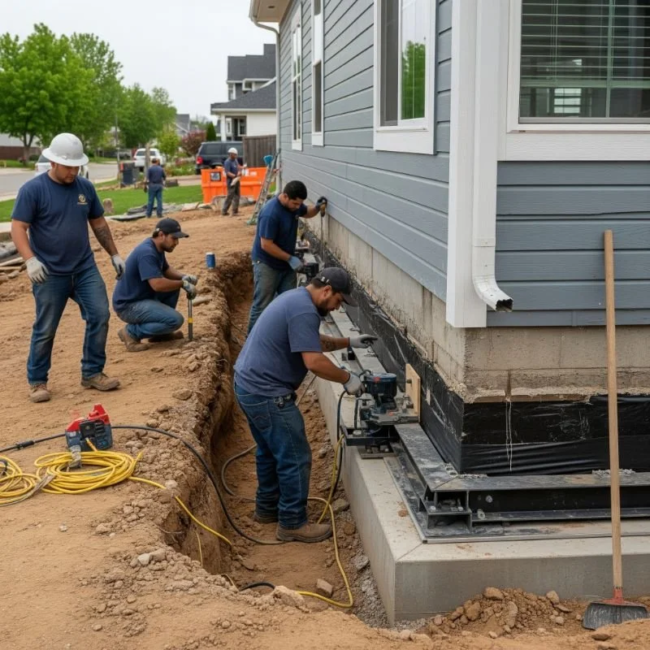
Maintaining the structural integrity of a home is one of the most significant responsibilities of property ownership. Because the foundation supports the entire weight of the structure, even minor shifts can lead to substantial complications over time. Understanding the financial landscape of foundation repair is essential for homeowners who need to budget for necessary maintenance while navigating the complexities of soil mechanics and structural engineering.
Understanding the Factors That Influence Cost
The total expense for residential foundation repair is rarely a flat fee. Instead, it is a calculation based on the severity of the damage, the method of repair required, and the underlying cause of the instability. Several primary factors dictate the final price point for these projects:
- Type of Foundation: Most homes sit on a concrete slab, a pier and beam system, or a crawl space. Slab repairs often involve different equipment and labor than adjusting wooden beams or joists.
- Severity of Damage: Addressing small foundation cracks is significantly more affordable than correcting a major foundation settlement where the house has physically sunk several inches into the ground.
- Soil Composition: Soil movement is a primary driver of structural issues. Expansive clay soils, which swell when wet and shrink when dry, require more robust stabilization methods than stable, sandy soils.
- Accessibility: If a repair crew needs to remove landscaping, porches, or interior flooring to reach the site of the damage, labor costs will rise accordingly.
Common Indicators of Foundation Problems
Before discussing specific costs, homeowners should recognize the signs that a foundation requires professional evaluation. Identifying these issues early can often prevent a linear problem from becoming an exponential financial burden.
Common signs include doors that no longer latch properly, windows that stick in their frames, and visible gaps between the wall and the ceiling. On the exterior, “stair-step” cracks in brickwork or large fissures in the concrete base are clear indicators of stress. These physical symptoms are usually the result of external environmental pressures, such as poor drainage issues that allow water to pool near the base of the home, weakening the load-bearing capacity of the earth.
Estimated Costs for Professional Services
To help you budget for potential structural maintenance, here is a detailed breakdown of 2026 pricing for the most common corrective measures.
Foundation repair
The average cost for residential foundation repair typically ranges from $2,200 to $8,400. This broad estimate covers various techniques, from basic waterproofing to structural reinforcement. The total is heavily influenced by the severity of the damage and whether the job requires specialized equipment or extensive excavation. Because of the technical nature of these projects, homeowners should always seek an assessment from a licensed foundation repair contractor to ensure the safety of the structure. Contractors like Sunshine Foundation Repairs, offer expert diagnostics to help property owners identify whether they are facing a simple cosmetic fix or a more complex structural requirement. These professional insights are vital for navigating the nuances of soil movement and its effect on your home’s stability.
Underpinning
Standard underpinning projects for a typical residential home generally fall between $10,000 and $30,000. This process is used to stabilize a house that has experienced significant foundation settlement. The technique involves installing supports deep into the earth to transfer the home’s weight to more stable soil or bedrock. Most projects require approximately 8 to 12 piers to secure the corners or failing wall sections, and the cost per pier location is a major factor in the final bill.
Helical pier installation
For existing homes, the installation of helical piers usually costs between $2,000 and $4,000 per pier. Unlike standard concrete piers, helical piers are “screwed” into the ground using hydraulic machinery, which allows for precise torque monitoring to ensure they can support the necessary load. While more expensive than some alternatives, they are often preferred in areas with high water tables or complex soil conditions where traditional excavation might be impractical.
Foundation slab repair
Homeowners can expect to pay between $1,000 and $10,000 for foundation slab repair. Slab foundations are often the most straightforward to address, with common methods including “mudjacking” or polyurethane foam injection to level a sinking section. If the slab only requires cosmetic resurfacing or minor foundation cracks stitching, costs remain at the lower end of the spectrum, while more extensive leveling and void-filling push the project toward the higher end.
Secondary Costs: Drainage and Prevention
The repair of the concrete itself is often only half of the solution. If the initial damage was caused by hydrostatic pressure or soil erosion, those environmental factors must be mitigated to prevent the problem from recurring.
- Drainage Systems: Installing French drains or gutter extensions can redirect water away from the foundation. Addressing these drainage issues is a critical component of a long-term repair strategy.
- Root Barriers: Large trees planted too close to a home can strip moisture from the soil, causing localized shrinkage and settlement.
- Soil Stabilization: In some cases, chemical stabilizers are injected into the ground to alter the way the soil reacts to moisture, providing a more consistent base for the home.
The Long-Term Value of Structural Stability
While the costs associated with foundation work can be daunting, delaying the process usually results in higher expenses. Foundation problems are progressive; a small crack that costs a few hundred dollars to seal today can evolve into a structural failure requiring tens of thousands of dollars in piering tomorrow. Furthermore, a home with documented foundation issues is difficult to sell, often requiring a significant price reduction or a completed repair before a mortgage can be approved for a buyer.
By focusing on high-quality materials and professional expertise, homeowners can ensure their property remains safe and marketable. Investing in the structural health of a home is not merely a repair expense but a necessary step in preserving the overall value of the real estate asset.