
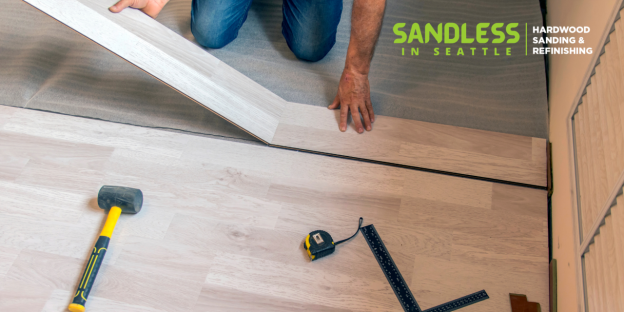
Hardwood flooring remains one of the most enduring investments a homeowner can make. Beyond adding immediate warmth and elegance, real wood floors consistently deliver higher long-term property values and exceptional resale returns.
However, installing hardwood in the Pacific Northwest presents a unique set of microclimate challenges.
From the damp coastal air off Puget Sound to the distinct architectural styles of century-old Craftsman bungalows in Queen Anne and modern high-rises in South Lake Union, successful installation requires local expertise.
Hiring expert hardwood floor installers Seattle WA ensures your investment withstands local weather conditions and remains structurally sound for decades.
The Pacific Northwest Climate: Why Wood Acclimation Matters
Seattle’s signature marine climate is characterized by mild, wet winters and warm, dry summers. Wood is a naturally hydroscopic material, meaning it constantly expands and contracts as ambient relative humidity fluctuates.
When fresh wood planks are brought into a home, they must adjust to the internal environmental conditions of that specific structure before installation begins. Professional floor installers monitor moisture levels using specialized pinless moisture meters.
- Acclimation Timeframe: Solid wood planks typically require 5 to 7 days of acclimation inside the temperature-controlled living space.
- Moisture Testing: The subfloor and the hardwood materials must reach a relative moisture balance—usually within a 2% to 4% margin of difference—before nailing or gluing begins.
- Expansion Gaps: Experienced craftsmen always leave perimeter expansion gaps along walls, hidden under baseboards, to accommodate seasonal wood movement without causing unsightly buckling or cupping.
Solid vs. Engineered Hardwood: Choosing the Right Material
Selecting the right material depends heavily on where in the home the flooring will be laid and the prevailing indoor moisture levels.
| Feature | Solid Hardwood | Engineered Hardwood |
| Composition Refinishing PotentialMoisture Stability Best Suited For | 100% solid timber plank Multiple times over decades Moderate (sensitive to humidity) Above-grade, dry living areas | Real wood veneer over plywood core1 to 3 times (depth dependent) High (cross-ply core stability) Basements, condos, over concrete |
Solid Hardwood Flooring
Solid wood offers unmatched longevity. Popular local wood species include White Oak, Red Oak, Douglas Fir, and Hard Maple. White Oak is particularly favored in modern coastal designs due to its closed grain structure, which offers superior water resistance compared to Red Oak.
Engineered Hardwood Flooring
Engineered planks feature a real hardwood top layer bonded over high-density plywood layers.
This cross-ply construction limits natural movement, making engineered wood an ideal choice for daylight basements, waterfront properties, or homes installed directly over concrete slabs using a moisture-barrier adhesive.
Step-by-Step Overview of the Professional Installation Process
A seamless installation requires rigorous structural preparation long before the first plank is laid.
- Subfloor Inspection and Repair: Contractors inspect the subfloor for rot, dips, or squeaks. Plywood or OSB subfloors are sanded flat or leveled with underlayment compounds to prevent structural deflection.
- Moisture Barrier Application: A high-quality underlayment or vapor retarder (such as silicone vapor paper or liquid epoxy membrane) is applied over the subfloor to block rising dampness.
- Plank Laying and Fastening: Depending on the material, boards are blind-nailed using pneumatic flooring staplers, glued down with flexible acoustic adhesives, or installed as a floating floor.
- Sanding, Staining, and Finishing (For Site-Finished Floors): Unfinished wood is sanded smooth, stained to the desired color tone, and sealed with protective topcoats like commercial-grade waterborne polyurethane.
Working with qualified hardwood floor installers Seattle WA guarantees that every phase, from initial moisture testing to final polyurethane application, strictly complies with National Wood Flooring Association (NWFA) standards.
Key Maintenance Rules for Northwest Hardwood Floors
To extend the lifespan of your timber floors:
- Control Indoor Humidity: Keep interior relative humidity between 35% and 55% year-round using whole-home humidifiers or dehumidifiers during season shifts.
- Manage Entryways: Place high-quality walk-off mats at all exterior entrances to catch rainwater, grit, and street salt before it reaches the wood surface.
- Avoid Damp Mopping: Clean floors using microfiber mops and manufacturer-approved wood cleaners. Excess water penetrating plank joints can cause edge-swelling and finish breakdown.
Frequently Asked Questions (FAQs)
How much does hardwood floor installation cost in the Seattle area?
On average, homeowners spend between $8 and $20 per square foot for total installation. This price range covers materials, labor, subfloor preparation, and basic finishing.
Costs vary based on the chosen wood species, layout complexity (such as herringbone patterns), and existing floor removal.
How long does a typical hardwood installation project take?
A standard residential project involving prefinished or engineered wood takes approximately 2 to 4 days.
However, if you choose site-finished solid hardwood requiring custom staining and multiple seal coats, the process takes about 7 to 10 days, accounting for mandatory drying times between finish layers.
Can hardwood floors be installed over radiant heating systems?
Yes, but engineered hardwood is strongly recommended over radiant heat due to its superior dimensional stability. The heating system must be properly calibrated, and heat output must be increased gradually to prevent thermal shock to the wood fibres.Read more at https://myflashyhome.com/.