
You have probably felt this yourself: the room is warm, the air feels heavy, and turning the AC down another notch sounds expensive. That is exactly where a modern ceiling fan can help. The honest answer is yes, modern ceiling fans can save energy, but not because they magically lower the room temperature. They save energy because they move air around your body, help sweat evaporate faster, make the room feel cooler, and let you stay comfortable at a higher thermostat setting. The U.S. Department of Energy says a ceiling fan can let you raise your thermostat by about 4°F without reducing comfort, and ENERGY STAR says certified ceiling fans can be up to 44% more efficient than conventional fans.
That sounds simple, but the real value is in how you use the fan. A modern fan used the right way can be one of the cheapest comfort upgrades in your home. Used the wrong way, it can waste a little electricity, move almost no useful air, and make you think ceiling fans “do not work.” So this article gives you the practical answer: when a modern fan saves energy, when it does not, how much it may cost to run, what size to buy, and which mistakes quietly cancel the savings.
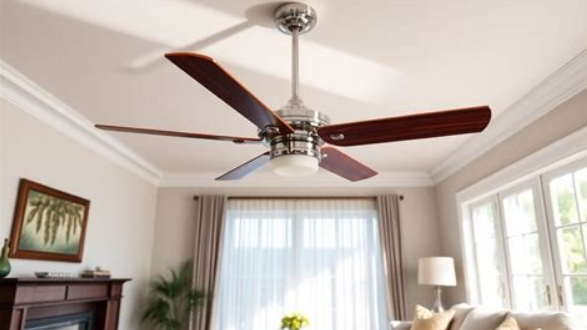
A modern ceiling fan works best when it is improving comfort for people in the room, not just spinning for decoration.
Why a modern ceiling fan saves energy even though it does not really “cool” the room
This is the part many people mix up. A ceiling fan does not work like an air conditioner. A fan mainly helps you feel cooler by increasing air speed around your skin. Wikipedia’s plain-language summary puts it well: ceiling fans cool people effectively by increasing air speed, but they do not reduce air temperature the way AC does. The DOE says the same thing in more practical terms: circulating fans create a wind-chill effect that makes you feel more comfortable.}
Think of it like this: air conditioning is like putting ice in a drink; it changes the drink itself. A ceiling fan is more like blowing across hot soup; the soup is still hot, but the surface loses heat faster and feels easier to handle. In your home, that means the fan does not make an empty room better. It makes an occupied room feel better. That is why one of the biggest energy-saving rules is also the easiest to forget: turn the fan off when nobody is there. The comfort benefit disappears, but the motor still uses electricity.
Key takeaway: a modern ceiling fan saves energy by helping you use less air conditioning for the same comfort, not by replacing physics.
How much electricity does a ceiling fan actually use?
For many households, the beautiful thing about a ceiling fan is not just the comfort. It is the tiny operating cost. To make the math practical, use the latest national residential electricity price from the U.S. Energy Information Administration: 17.45 cents per kWh for January 2026. :contentReference[oaicite:4]{index=4}
Here is the simplest formula you can use at home:
Formula 1: Fan running cost
Cost = (Watts ÷ 1000) × Hours used × Electricity price per kWh
In plain language, that means: turn the fan’s wattage into kilowatts, multiply by how long you run it, then multiply by your local electricity price.
Example 1: say your modern fan uses 50 watts on the setting you like, and you run it 8 hours a day for 30 days. That is:
(50 ÷ 1000) × 240 × $0.1745 = about $2.09 per month
Example 2: say you buy an efficient DC-motor model and it averages 20 watts on your usual setting. Then the monthly cost becomes:
(20 ÷ 1000) × 240 × $0.1745 = about $0.84 per month
That is why ceiling fans feel so convenient. Even when electricity prices are not cheap, the fan itself is usually a small line item. The big savings come from what the airflow lets you avoid doing with the AC. ENERGY STAR says certified ceiling fans are up to 44% more efficient than conventional fans, and DOE says ENERGY STAR certified models can be up to 60% more efficient than conventional models, depending on the context and test framing shown on the two federal pages. The safe practical conclusion is simple: an efficient modern fan uses very little power for the comfort it delivers.
| Everyday setup | Simple assumption | Monthly electricity use | Estimated monthly cost |
| Modern fan, medium-high use | 50 W, 8 h/day | 12 kWh | $2.09 |
| Efficient DC fan | 20 W, 8 h/day | 4.8 kWh | $0.84 |
| Fan left on in empty room | 50 W, 24 h/day | 36 kWh | $6.28 |
The third row is important. Six dollars or so a month may not sound dramatic, but it buys you zero comfort if the room is empty. That is one of those quiet “money leaks” many people never notice.
Where the real savings come from: using the fan to ease off the AC
The DOE’s most useful practical number is this: using a ceiling fan can let you raise the thermostat by about 4°F without reducing comfort. That matters because every degree of extra cooling forces your AC to work harder. A fan gives you another path. Instead of telling the AC to do all the comfort work, you let air movement do part of it.
Here is a second simple formula you can actually use:
Formula 2: Estimated cooling savings from fan-assisted AC use
Estimated savings = Monthly cooling bill × Reduction rate
This one is intentionally simple. It is not a law of physics; it is a budgeting tool. If your summer cooling bill is $120 for the month and using the fan lets you reduce AC use by a modest 10%, your estimated savings are:
$120 × 0.10 = $12
Now compare that with the fan operating cost from the first formula. If the fan costs you around $2.09 for the month and helps you avoid $12 of cooling cost, the net effect is still clearly positive. Your actual result depends on your climate, insulation, AC type, fan size, and habits, but this is the right way to think about it: the fan is not the whole solution; it is a cheap helper that makes the expensive machine work less.
Key takeaway: the strongest energy-saving setup is usually fan + a slightly higher thermostat, not fan alone in brutal heat and not AC alone when a breeze would have been enough.
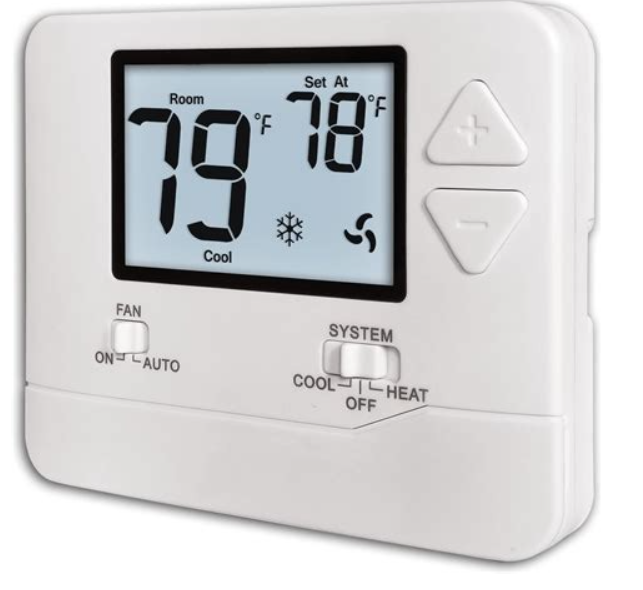
A ceiling fan often saves the most energy when it helps you stay comfortable at a higher thermostat setting.
3 everyday situations where a modern ceiling fan is genuinely useful
1) The bedroom at night. You are trying to sleep, the room is not dangerously hot, but it feels stale. In that case, a quiet modern fan can be a lifesaver. It gives you moving air, often lets you avoid dropping the thermostat further, and may also help with the feeling of stuffiness. This is especially helpful for people who sleep warm, people in upper-floor bedrooms, and anyone who dislikes blasting cold air directly at the bed. The fan does not need to run at full speed. A lower steady speed is often more comfortable and cheaper. DOE’s guidance on air movement and year-round comfort supports this kind of use.
2) The living room in late afternoon. This is a classic real-life moment. Sun has heated the room, people are sitting still, and the air feels flat. Turning the fan on while nudging the thermostat higher is one of the easiest “comfort for less” moves in a house. If the room is under about 225 square feet, DOE says a 36- or 44-inch fan may fit; for larger rooms, 52 inches or more is a better starting point. That sizing matters because an undersized fan can spin and still feel weak.
3) The kitchen or home gym. These are heat-making spaces. Cooking, moving, and warm appliances all add to discomfort. A correctly sized fan can make the room feel much easier to be in, even if it is not replacing AC. This Old House’s updated 2026 sizing guide notes that heat-heavy spaces and rooms needing extra circulation may benefit from larger fans or multiple fans.
4) The covered patio or sunroom. Here the fan’s value is sometimes even more obvious. You are not trying to refrigerate the outdoors. You just want moving air so the space feels pleasant enough to use. That is one reason fans remain so practical: they improve comfort in places where AC would be wasteful, awkward, or impossible. The same basic comfort principle still applies.
What kind of modern ceiling fan saves the most energy?
Not every fan is equal. The most useful buying shortcut is to start with the ENERGY STAR label. That immediately narrows the field to products that meet stricter efficiency requirements and are independently certified. ENERGY STAR also offers a product finder and rebate information, which is genuinely useful when you are comparing models instead of staring at marketing claims.
After that, pay attention to four practical features:
- Correct size for the room. A fan that is too small may look fine but feel weak. A fan that is too large can be awkward or create more breeze than you want. DOE and This Old House both stress matching blade span to room size.
- A reversible motor. In summer, the fan should typically run counterclockwise to create a cooling breeze. In winter, DOE recommends reversing it to clockwise on low speed to circulate warm air down from the ceiling.
- Good motor efficiency. Modern DC-motor fans are often quieter and more efficient than older designs. Even when the brand marketing is enthusiastic, the broad market trend toward quieter, lower-power modern motors is real.
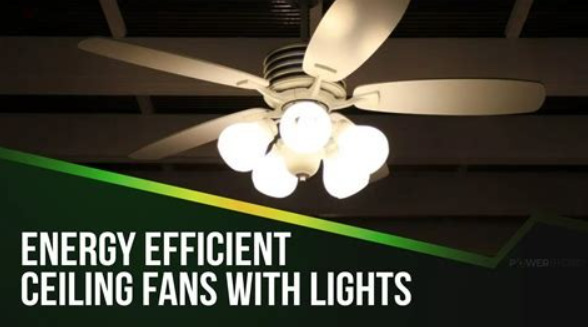
- Integrated LED lighting, if you need a light anyway. If the fan also serves as the room’s overhead light, pairing it with efficient lighting avoids the “separate fan plus wasteful light fixture” problem. ENERGY STAR’s buying guidance also points buyers toward bulb brightness and product criteria when choosing fan-light combinations.
| Room size or situation | Fan size starting point | Why it helps | Easy buying note |
| Up to 225 sq. ft. | 36″ or 44″ | Enough airflow without overdoing it | Good for bedrooms, offices, small living rooms |
| Large rooms | 52″+ | Better reach across the space | Useful for open-plan rooms |
| Rooms longer than 18 ft. | Multiple fans | More even circulation | Better than one fan trying to do everything |
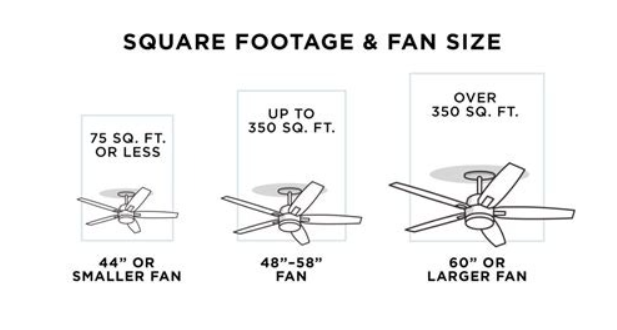
Correct sizing matters more than many people expect; a too-small fan often disappoints even if the motor is new.
Common confusion #1: “If it is spinning, it must be saving energy”
Not always. A spinning fan is only helping if it is improving comfort enough to let you reduce AC use or avoid lowering the thermostat further. If the room is empty, there is no body to cool, no sweat to evaporate, and no comfort benefit to gain. The fan is just consuming electricity and adding a tiny amount of motor heat.
This is one of the most relatable mistake stories in real homes: someone leaves the living-room fan on all day “to keep the room cool for later.” Then they come back hours later, and the room is not meaningfully cooler. The better habit is simple: turn the fan on when you are using the room, and turn it off when you leave.
Common confusion #2: “A ceiling fan is enough to replace AC in every climate”
Also not true. The DOE says ceiling fans can sometimes replace air conditioning in moderate climates, and that wording matters. When humidity is extreme or indoor heat is building dangerously, a fan is not a magic solution. It is a comfort tool, not a universal substitute for active cooling. In very hot weather, the smartest setup is often a mix: use the fan for air movement, shading for heat control, and AC only as much as needed.
That is why modern fans are so useful for everyday efficiency. They are not trying to do the impossible. They are doing the cheap part of the comfort job so your expensive cooling system does less.
Common confusion #3: “Any modern fan will do”
This is where people lose money without realizing it. A badly sized fan, a noisy model you avoid using, or a fan installed too high or too low can all reduce the benefit. The DOE recommends ceilings of at least eight feet, and This Old House emphasizes ceiling height and room layout when choosing size and mounting style. In other words, a fan is not just an object you buy; it is a system that has to match the room.
3 relatable mistake stories and how to avoid them
Mistake story 1: The “always on” fan. You leave the fan running in the guest room for days because it “feels efficient.” In reality, the room gets no people-cooling benefit, only a small extra electricity cost. Fix: use a wall timer, smart control, or the habit of switching it off when you leave.
Mistake story 2: The tiny fan in the large family room. It looks stylish, but everyone still says the room feels stuffy. Fix: measure the room first. A larger room may need a 52-inch fan or more, and very long rooms may need two fans
Mistake story 3: The fan spins the wrong way all summer. This is surprisingly common. If the direction is wrong, you do not get the right downward breeze in warm weather. Fix: in summer, set it to counterclockwise; in winter, switch to clockwise on low.
| Common mistake | Why it fails | Simple fix | Likely result |
| Leaving fan on in empty room | No comfort benefit | Use only when occupied | Less wasted electricity |
| Buying the wrong size | Weak or uneven airflow | Match fan to room size | Better comfort at the same setting |
| Wrong blade direction | Poor seasonal performance | Counterclockwise summer, clockwise winter | More useful airflow year-round |
Do ceiling fans save energy in winter too?
They can, and this is one of the more underrated benefits. Warm air rises. In winter, that means some of the heat you paid for ends up collecting near the ceiling. The DOE recommends reversing the fan to clockwise on a low speed to circulate that warm air back down into the living area. This does not turn the room into summer, of course, but it can make the space feel more even and reduce the urge to keep turning the heat up.
This is especially useful in rooms with higher ceilings, stairwells nearby, or heat sources that create noticeable layering. If you have ever walked from one side of a room to another and felt one spot warmer than another, you have already noticed the problem the fan is helping solve.
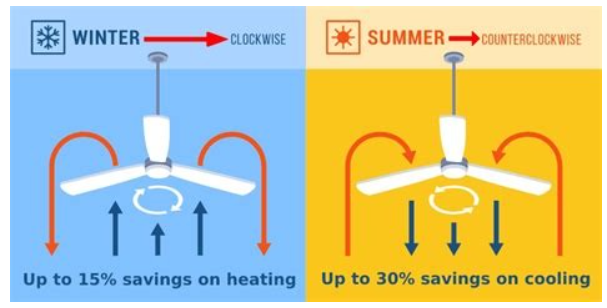
The small reverse switch can make a noticeable difference: summer for breeze, winter for gentle recirculation.
How modern fans are better than the old “just spin and hope” models
Modern ceiling fans are often better in three everyday ways. First, they usually have more efficient motors and blades. Second, many are quieter, which means you actually keep using them instead of getting annoyed and turning them off. Third, better controls matter: remotes, wall controls, and smart schedules make it easier to use the fan only when it helps. ENERGY STAR’s product page highlights improved motors and blade designs as part of why certified models are more efficient.
That may sound boring, but it changes real behavior. A clunky old fan with only one loud useful speed tends to be ignored. A smooth, quiet fan with easy controls gets used exactly when needed. That difference in day-to-day use is where convenience turns into actual savings.
Safety still matters, especially if you are replacing a light fixture
There is one practical warning you should not skip. A ceiling fan is not just a light with blades. It needs proper support and proper clearance. Wikipedia’s summary notes the installation stresses involved and why ceiling fans require appropriate support; DOE also says to follow manufacturer instructions and make sure ceilings are at least eight feet high. If you are unsure whether your electrical box is rated for a fan, this is not the place to guess.
For product safety and recall checks, the CPSC ceiling fan pages are worth bookmarking. That is especially useful if you are buying a discounted unit online, using an older fan, or wondering whether a wobble is just annoying or a sign that something needs attention.
6 practical links worth opening before you buy or adjust anything
- Wikipedia’s ceiling fan page — a quick, easy definition of how ceiling fans work, why they cool people rather than the air, and what the main parts do.
- ENERGY STAR ceiling fans — a practical federal page to find efficient models, rebates, and product guidance before you shop.
- DOE Fans for Cooling — the best plain-language government guide on fan direction, sizing basics, and the 4°F thermostat rule.
- EIA Electric Power Monthly — a current official source for electricity prices so you can estimate your running cost with real numbers instead of guessing.
- U.S. Consumer Product Safety Commission ceiling fan pages — useful for recall checks and safety awareness if you own an older or discounted model.
- This Old House sizing guide — a consumer-friendly, recently updated guide that helps you match fan size to room size and ceiling height.
So, do modern ceiling fans save energy?
Yes — when you use them as a comfort multiplier, not as a room-cooling myth. That is the clearest possible answer.
If you buy the right size, choose an efficient model, run it in the correct direction, and use it in rooms people are actually occupying, a modern ceiling fan is one of the easiest low-cost ways to improve comfort while trimming cooling demand. The fan itself is usually cheap to run. The bigger payoff comes from needing less help from the AC and from getting more comfort out of the heating or cooling system you already have. DOE’s guidance on the 4°F thermostat adjustment and ENERGY STAR’s efficiency guidance are the strongest practical reasons this remains true in 2026.
If you want the shortest version to remember, keep these three rules in your head: size it right, switch the direction by season, and turn it off when the room is empty. Do that, and a modern ceiling fan is not just decorative. It becomes a genuinely useful, convenient, easy-to-run energy-saving tool for everyday life.
The best modern ceiling fan is the one that feels comfortable enough to use often and efficient enough not to worry about.