
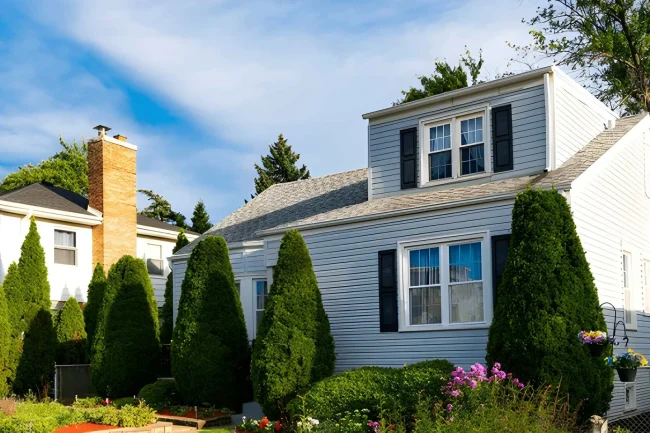
When a house on your street goes up for sale, the first thing buyers notice isn’t the kitchen or the master bath. It’s the exterior. Before anyone steps foot through the front door, a home’s outside appearance is already doing most of the talking. That’s curb appeal, and it matters more than most homeowners give it credit for. Something as seemingly routine as a pending siding repair can be the difference between a home that attracts competitive offers and one that sits on the market collecting price reductions.
But here’s what often gets overlooked: curb appeal isn’t just about the individual home. It affects the entire neighborhood.
The Block Effect: Why One Home’s Exterior Impacts Everyone Nearby
Real estate appraisers use something called the “principle of conformity,” which basically means a home’s value is partly determined by the properties surrounding it. When homes in a neighborhood look well-maintained, they pull each other up. When they don’t, they can drag values down.
A 2023 analysis from the National Association of Realtors found that exterior improvements consistently rank among the projects with the highest return on investment at resale. But the impact doesn’t stop at the property line. When one home on a block updates its siding or repairs visible exterior damage, comparable sale prices in that immediate area tend to rise as well. Appraisers pull comps within a defined radius, and the condition of neighboring homes is factored into the final valuation.
Think about it from a buyer’s perspective. You’re touring a home you love. The inside is great. But two houses down, there’s a property with peeling siding, visible rot around the window trim, and panels that have started to buckle and warp. That visual registers immediately, whether or not the buyer consciously processes it. It introduces doubt. And doubt in real estate almost always translates to lower offers or a decision to keep looking.
What Buyers Actually See When They Drive By
Curb appeal works on psychology as much as anything else. Studies on decision-making suggest that people form an impression of a home in about seven seconds, well before they’ve looked at the square footage or read the listing description. Within those first few seconds, the eye is drawn to:
- The condition of the roof
- The state of the exterior cladding (siding)
- Landscaping and lawn care
- Windows and trim detail
- The driveway and walkway condition
Siding takes up more visible surface area than almost any other exterior element. It’s not a small detail. It’s the dominant visual of the entire front face of a home. Faded color, cracked panels, water staining, or warping doesn’t just look bad. It signals to buyers that the home may have been neglected in other ways, too.
That association is hard to shake. Even if the home has been meticulously cared for on the inside, deteriorating siding creates a credibility gap. Buyers start to wonder what else hasn’t been addressed.
The Numbers Behind the Visual
ROI data on siding projects consistently supports what buyers say they respond to. According to Remodeling Magazine’s Cost vs. Value Report, fiber cement siding replacement returns roughly 88 cents on every dollar spent at resale in many U.S. markets. Vinyl siding replacement consistently lands in the 80 percent return range. Those are among the strongest returns of any home improvement project, outperforming many kitchen and bathroom upgrades.
That’s worth sitting with for a second. A project that lives entirely on the exterior of your home, with no square footage added and no interior finishes upgraded, generates returns that beat most interior renovations. The reason is simple: buyers pay a premium for homes that look move-in ready. Siding that looks fresh, tight, and well-maintained communicates exactly that.
Siding Damage and What It Signals to Appraisers
When a professional appraiser walks a property, they’re trained to note deferred maintenance. Siding damage is one of the most visible and documentable forms of it. Appraisers will flag things like:
- Cracked or missing panels
- Rot or soft spots near the foundation or around windows
- Gaps at seams or corners
- Staining that suggests moisture infiltration
- Panels that have pulled away from the structure
Each of these can result in a downward adjustment to the appraised value. In some lending scenarios, especially FHA and VA loans, certain levels of exterior damage can actually hold up the financing process entirely until repairs are made. That’s not a hypothetical. It’s a real situation homeowners run into during the sale process, often at the worst possible time.
The smarter move is to address siding issues well before a sale, and not just for the appraisal. Repairs made proactively, before moisture and structural damage compound, cost significantly less than repairs made under deadline pressure during a pending transaction.
The Neighborhood Morale Factor
There’s a softer element here that doesn’t always get talked about in real estate conversations, but it’s real. Neighborhoods where residents take visible pride in their properties tend to attract buyers who share those values. That creates a self-reinforcing cycle where maintenance stays high, values stay stable, and turnover happens under favorable conditions.
Conversely, when a few homes start showing signs of neglect, the perception of the whole street starts to shift. It doesn’t have to be dramatic. Warped siding on two or three homes can be enough to change the character of a block in a buyer’s mind, especially in a competitive market where buyers have options.
Longtime residents often don’t realize how desensitized they’ve become to gradual exterior deterioration. A panel that warped a little two years ago and a little more last year eventually becomes significant damage that reads immediately to anyone who hasn’t been watching it slowly happen. That fresh set of eyes is exactly what a buyer, appraiser, or agent brings to the property.
What “Good Siding” Actually Means in 2026
Siding technology has changed a lot over the past decade. Today’s fiber cement, engineered wood, and premium vinyl products are better at handling moisture, temperature swings, and UV exposure than older materials. They also hold color longer and resist impact better, which matters in climates where hail and wind are seasonal realities.
From a curb appeal standpoint, siding options have expanded well beyond the standard color palette of the past. Homeowners now have access to lap profiles, board-and-batten arrangements, vertical and horizontal combinations, and a wide range of colorways that can dramatically modernize an older home’s exterior without touching the floor plan.
When siding is done right, with proper installation technique, appropriate trim details, and quality flashing around windows and doors, it can make a 30-year-old home look like it was built last year. That visual reset has real value in a neighborhood where comparable properties are fighting for buyer attention.
Small Repairs Still Matter
Not every siding project has to be a full replacement. Small, targeted repairs, when done correctly, still contribute to curb appeal and protect the home from the moisture and structural issues that come with neglected panels.
The key word there is “correctly.” Mismatched panels, inconsistent caulking, or patchwork repairs that don’t account for the underlying cause of the damage often make the exterior look worse than it did before. Quality repairs use materials that match the existing installation as closely as possible, address the root cause rather than just the symptom, and are blended into the surrounding area so the work isn’t visually obvious.
When a repair looks like a repair, it can still signal deferred maintenance. When it’s done well, it looks like part of the original installation.
The Bottom Line
Curb appeal isn’t a cosmetic concern. It’s a financial one. Siding, more than almost any other exterior element, shapes how a home is perceived from the street, how it’s valued by appraisers, and how it influences the confidence of potential buyers in everything they’re about to see.
For homeowners, the practical takeaway is straightforward: don’t let visible exterior issues sit unaddressed, especially on the siding. The investment in keeping that surface clean, intact, and visually sharp pays off in resale value, neighborhood standing, and the kind of first impression that opens doors rather than closing them before anyone even walks through.
This article is intended for general informational purposes. Specific ROI figures and appraisal outcomes vary by market, property condition, and material selection. Consult a local real estate professional or exterior contractor for guidance specific to your home.Read more at https://myflashyhome.com/.