
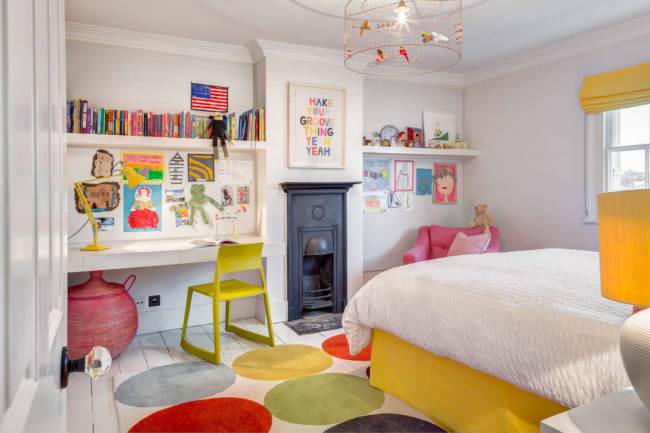
There’s a common instinct when you move into a new house with kids. You tackle the kitchen first because everyone needs to eat. Then the living room because the boxes are driving you crazy. Then maybe the bathroom because it’s small, and you can knock it out in 20 minutes and feel like you accomplished something. The kids’ rooms fall somewhere after all of that, usually around the point where you’re exhausted and just tossing stuffed animals onto an unmade bed.
That order makes sense from an adult brain. But from a kid’s perspective, it’s backwards. A child who walks into a new house and finds their bedroom already set up with their own stuff in recognizable places has a completely different first night than one who sleeps on a bare mattress surrounded by taped-up boxes. The Child Mind Institute puts it pretty directly: younger kids thrive on routine and predictability, and a move disrupts both at the same time. Getting their space set up quickly helps rebuild some of that stability before the rest of the house is even close to finished.
What a lot of parents don’t realize is that the physical environment plays a bigger role in kids adjustment than most moving guides acknowledge. It’s not just about keeping routines intact or talking through feelings, though both of those matter. The room itself, how it’s arranged, what’s in it, and whether it feels like theirs, sends a signal. A finished room says “you belong here” in a way that words alone don’t. And that signal hits harder for younger kids who can’t fully process why everything around them just changed.
Why Their Room Matters More Than Yours Right Now
Adults can tolerate chaos. We can eat takeout on the floor and sleep in a room full of boxes and still function the next day. Kids, especially younger ones, don’t have that same flexibility. Their sense of safety is tied to the physical space around them more than we tend to give credit for. A bedroom that looks and feels familiar is doing psychological work that you can’t replicate with a pep talk.
The American Academy of Child and Adolescent Psychiatry notes that children in kindergarten and first grade are especially vulnerable during a move because they’re already in the process of separating from parents and adjusting to new social structures. A relocation can push them back toward dependency. Having their own space set up and stable gives them something solid to come back to when the rest of the world feels unfamiliar.
Older kids feel it differently but no less. A teenager who walks into an empty room in a house they didn’t choose is carrying a different kind of weight. Giving them input on how the room gets set up, even small choices like where the desk goes or what color the curtains are, can shift their relationship to the space from “this was done to me” to “I’m part of this.”
How to Set It Up Before You Unpack Anything Else
The trick is packing for it ahead of time. When you’re boxing up the old house, label everything for your kid’s room separately and make sure those boxes are the last ones loaded onto the truck. That way they come off first. Bedding, a few favorite toys, their nightlight, whatever books they’re currently reading, and maybe a familiar piece of wall art. That’s the starter kit. Working with a moving team that understands priority unloading can make this much easier to pull off.
Make the bed before they walk in. It sounds small, but a made bed with their own sheets in a room that’s at least partly arranged changes the emotional temperature of that first night. If you can position the bed in a similar spot to where it was in their old room, even better. Kids notice spatial patterns more than adults expect.
Resist the urge to change everything at once. If they had a twin bed at the old house, this isn’t the time to upgrade to a full. If their bookshelf was white, don’t swap it for something new just because the new room is bigger. Continuity matters. You can make updates later, once the room feels like home. For now, familiar wins.
Giving Them a Say Without Giving Them Full Control
There’s a balance here. Letting a five-year-old design their own bedroom from scratch will end in frustration for everyone. But giving them two or three choices, this wall color or that one, lamp on the left side or the right, stuffed animals on the shelf or the bed, creates a sense of ownership without creating chaos.
Older kids can handle more input. Let them pick out a new rug or choose where to hang their posters. Some kids get excited about Pinterest boards or room layout sketches. Others just want to close the door and figure it out themselves. Both responses are fine. The point isn’t to turn it into a design project. It’s to give them some agency in a situation where they probably didn’t get a vote on the biggest decision.
The Rest of the House Can Wait
This is the part that’s hard for parents to accept. You want the whole house to feel settled. You want the kitchen organized, the living room functional, and the boxes gone. And all of that will happen. But right now, in the first 48 hours, the thing that makes the biggest difference for your kid isn’t whether the pantry is sorted. It’s whether their room feels like it belongs to them.
A kid with a finished room and a chaotic house around them handles the transition better than a kid with a chaotic room and a spotless kitchen. They retreat to their space when they need to. They play on their floor. They look at their stuff on their shelves and slowly start to believe that this new place might actually be okay.
It won’t solve everything. There will still be bad nights, tough mornings, and the occasional meltdown about missing the old house. But a room that feels right gives them a landing pad. And when the rest of the house catches up, which it will, you’ll be glad the hardest emotional work was already done.