
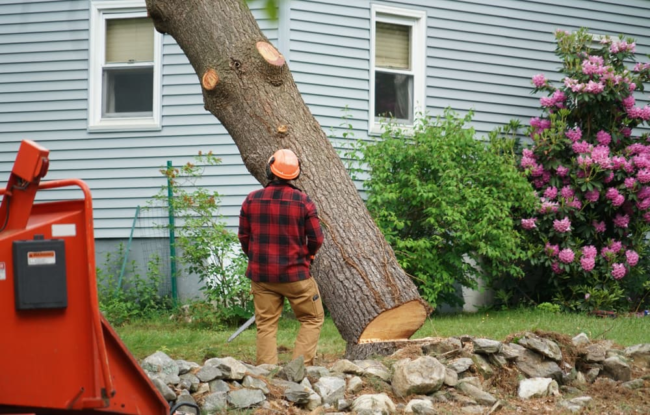
A tree close to your patio adds shade and privacy. Over time, that same tree can become a real hazard. New Hampshire winters are hard on trees. Ice storms, heavy snow, and summer thunderstorms all cause damage. A tree that looked fine last fall may need tree removal this spring.
Knowing when to act protects your patio, your home, and your family.
Signs the Tree Near Your Patio Is a Problem
The tree is leaning toward your patio. A lean that gets worse over time is a warning sign. Check the base of the tree. If the roots look like they are pulling out of the ground, the tree is not stable. This is one of the most common hazardous tree situations in Hopkinton, Bow, and Loudon.
Dead branches hang over the area. Dead branches dry out, go brittle, and fall. A dead tree or dying branches over a patio are a falling hazard every time the wind picks up. Storm damage in New Hampshire often starts with branches that were already weak.
The trunk has cracks or hollow spots. A healthy trunk is solid. Large cracks or hollow spots mean the wood is rotting inside. A tree with a hollow trunk can fall on a calm day. This is common with older sugar maples and American beech trees across central New Hampshire.
Fungus is growing at the base. Mushrooms or shelf fungus at the base are a warning. They usually mean the roots or lower trunk are rotting. The tree may still look full up top. A rotting base is one of the biggest tree safety risks near a structure.
The roots are lifting your patio. Tree roots follow water. Sometimes that path runs right under your patio or walkway. Cracked or raised patio stones are a clear sign. A tree service professional can tell you whether root work or full tree removal makes more sense.
The tree barely survived last winter. Split branches or a cracked trunk from a past ice storm leave weak spots behind. Those weak spots are where the next failure starts. A proper tree risk assessment after a hard winter can catch problems early.
When Trimming Is Enough and When It Is Not
Tree removal is not always the answer. Residential tree trimming works well when the trunk is healthy and only a few heavy branches are the issue. Raising the lower branches keeps them off your patio. Taking out overgrown branches on one side lowers the fall risk.
Trimming has limits, though. If the trunk has a weak spot or the roots have rotted, no branch work will make that tree safe. A tree care expert from Tree Fellas looks at the full picture, including the trunk, roots, branches, and lean, and gives you a straight answer.
How NH Seasons Change the Risk
Spring is when the ground stays soft from snowmelt. Trees with weak roots tip over more easily. Walk your yard after winter and check any trees close to your patio.
Summer brings thunderstorms through Bow, Loudon, and the towns around Concord. Fallen trees and fallen branches are the most common emergency tree service calls during storm season.
Fall is the right time to deal with damaged trees before winter arrives. Removing a hazardous tree in fall is far easier than emergency removal after a nor’easter drops it onto your patio.
Winter is when ice builds up on branches. A tree with a cracked trunk can come down under that weight alone.
Get a Free Estimate Before the Next Storm
You do not have to figure this out on your own. A tree care expert will come to your property, look at the tree up close, and give you a clear written estimate at no cost. You will know exactly what needs to happen and what it will cost, with no surprises.
If a tree near your patio does not look right, get a safety check done before the next storm rolls through.