
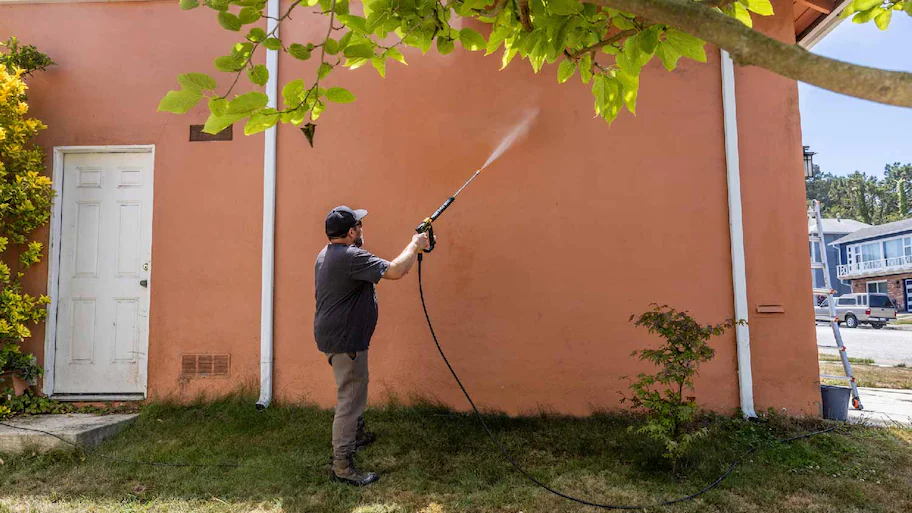
Maintaining the exterior of your home is essential for preserving its value and kerb appeal. When it comes to cleaning driveways, roofs, render, and patios, UK homeowners often face a crucial decision: should they opt for soft washing or pressure washing? Understanding the differences between these two methods can save you money, protect your property, and ensure outstanding results.
What Is Pressure Washing?
Pressure washing, also called power washing, uses high-pressure water jets to clean dirt, grime, moss, and stains from hard surfaces. Water is forced through a nozzle at pressures usually between 1,300 and 3,000 PSI (pounds per square inch). This makes it very effective for tough cleaning tasks.
This method is great for cleaning tough surfaces like concrete driveways, block paving, and tarmac. The strong pressure can remove stubborn oil stains, years of built-up dirt, and even chewing gum from sidewalks. In heavily soiled areas where grime has collected over time, pressure washing provides fast and clear results.
However, the same power that makes pressure washing effective can also create risks. When used improperly or on delicate surfaces, high-pressure water can cause serious damage. Roof tiles can crack, mortar can wear away, render can be removed, and wooden surfaces can splinter.
What Is Soft Washing?
Soft washing uses a gentler method. It doesn’t depend only on water pressure. Instead, it blends low-pressure water with specially formulated cleaning solutions. The water pressure in soft washing is usually between 100 and 500 PSI, which is about the same as the pressure from a garden hose.
The cleaning solutions handle the majority of the work in soft washing. These biodegradable treatments break down organic growth such as algae, moss, and lichen at the root level. They kill spores and prevent regrowth for a long time. The low-pressure application keeps delicate surfaces safe while still providing a thorough clean.
Soft washing works well for roofs, render, painted surfaces, UPVC cladding, and any area where high pressure could cause harm. It is also the best method for cleaning composite decking and older masonry that may have weakened pointing.
When to Choose Pressure Washing
Pressure washing is still the best option for some tasks. Block paving that is heavily stained with oil or dirt benefits significantly from high-pressure cleaning. The water’s force can reach deep into porous surfaces and remove contaminants that gentler methods cannot remove.
Concrete driveways and patios that are covered in thick moss or algae respond well to pressure washing. Pattern-imprinted concrete, when sealed properly, can withstand the pressure and look refreshed afterward. For commercial properties or large areas where speed is important, pressure washing provides efficiency that soft washing cannot match.
The key is using the right pressure for each surface and keeping a safe distance to prevent damage. Professional operators grasp these details and adjust their equipment as needed. They also know when to add steam cleaning, which combines heat with controlled pressure for the best results.
When Soft Washing Is the Better Option
For UK homeowners concerned about preserving their property’s integrity, soft washing often proves to be the superior choice. Roof cleaning should almost always be conducted using soft washing techniques, especially on older properties. Roof tiles and slates can be surprisingly fragile, and even a moment of high-pressure washing can cause cracks that lead to costly leaks.
Render cleaning is another area where soft washing shines. Modern renders are reasonably durable, but high pressure can still cause pitting, remove texture, or create patterns of damage. Soft washing removes algae and dirt without compromising the render’s surface, keeping your home looking pristine whilst maintaining its weatherproofing.
If you’re considering exterior cleaning for your property, consulting with experienced professionals who understand both methods is invaluable. Companies like Fibre and Fabric in Essex offer both steam cleaning and soft washing services, allowing them to recommend the most appropriate approach for your specific surfaces. Their expertise ensures your property receives the care it deserves without unnecessary risk.
UPVC fascias, soffits, and guttering also benefit from the gentle touch of soft washing. These plastic components can become brittle over time, particularly on south-facing aspects exposed to constant UV light. High-pressure washing can crack them or force water into seams, but soft washing cleans thoroughly without stress.
The Environmental Perspective
Environmental considerations increasingly influence homeowners’ choices. Pressure washing uses significantly more water than soft washing, with some pressure washers consuming hundreds of litres per hour. This water consumption, combined with the runoff carrying contaminants into drains, raises sustainability concerns.
Soft washing uses far less water overall. Whilst it does employ chemical treatments, modern biodegradable solutions break down naturally without harming plants or wildlife. Responsible operators ensure that cleaning agents comply with environmental regulations and take care to protect your garden during the cleaning process.
The long-lasting effects of soft washing also support its environmental benefits. Since soft washing eliminates organic growth at the source instead of just removing it, surfaces remain clean for a longer time. This leads to less frequent cleaning, reduced water use over time, and fewer chemicals in the environment overall.
Cost Considerations
Price naturally factors into any homeowner’s decision. Pressure washing typically costs less per square metre than soft washing, making it attractive for large driveways or commercial spaces. The speed of pressure washing also means labour costs remain relatively low.
However, the initial savings of pressure washing can be misleading. If high-pressure cleaning damages your roof tiles, rendering, or paintwork, the repair costs can quickly surpass any early savings. Also, since pressure washing doesn’t stop regrowth like soft washing does, you may have to clean more often.
Soft washing represents a wise investment for delicate surfaces. The combination of thorough cleaning and preventative treatment means your property stays cleaner for longer, potentially saving money over the years. When you factor in the peace of mind that comes from knowing your property hasn’t been damaged, soft washing’s value proposition becomes even clearer.
Making the Right Choice
The decision between soft washing and pressure washing shouldn’t be made lightly. Start by honestly assessing your property’s surfaces. Newer properties with robust materials may tolerate pressure washing well, whilst older homes with traditional roofing and render materials generally require gentler approaches.
Consider the specific cleaning challenge you’re addressing. Is it surface dirt that’s built up over a season or two, or is it organic growth that’s been establishing itself for years? Surface dirt responds to either method, but established moss and algae need the treatment aspect of soft washing to prevent immediate regrowth.
Consider your long-term property maintenance plan. Are you looking to sell soon and need quick cosmetic upgrades? Or are you keeping your forever home and seeking solutions that protect your investment? Your timeline and priorities should guide your decision.
Final Thoughts
The choice between soft washing and pressure washing depends on your specific surfaces and cleaning needs. Pressure washing works best for robust, heavily soiled hard surfaces, whilst soft washing protects delicate areas like roofs and render whilst preventing regrowth.
For UK homeowners seeking expert guidance, working with professionals who offer both services ensures you receive honest, tailored advice. Fibre and Fabric provides comprehensive exterior cleaning solutions throughout Essex, combining technical expertise with transparent pricing and satisfaction guarantees. Choosing experienced specialists ensures your home receives the care it deserves.