
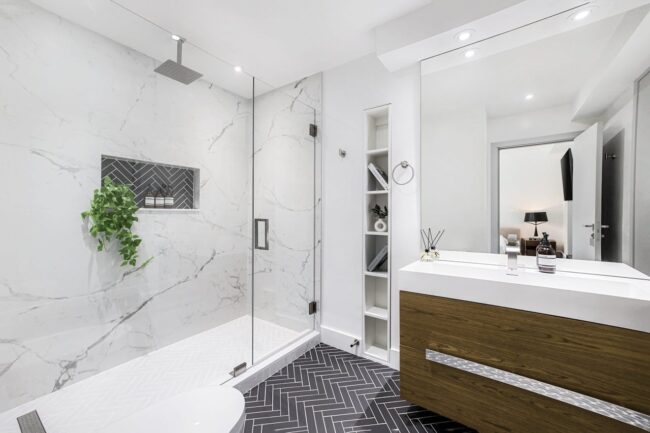
Walk into any home that’s been sitting on the market too long, and there’s a good chance the bathroom has something to do with it. Stained grout, rusty hardware, dim lighting, or a cracked mirror. These small things pile up in a buyer’s mind. They start doing the math on renovation costs before they’ve even seen the backyard.
The good news is that none of these problems requires a contractor. Most bathroom updates that actually move the needle are quick, affordable, and doable on a weekend. This guide covers every angle from the first thing buyers notice to the finishing touches that make a space feel truly cared for.
| 72%Buyers judge a home by the bathroom | $500Average spend for high-impact updates | 2xROI on bathroom staging improvements |
Why Bathrooms Carry So Much Weight
Bathrooms are one of the most personal spaces in a home. Buyers instinctively know how much work goes into keeping them clean and functional. When a bathroom looks great, it tells a story. This home was loved and looked after. When it looks worn down, it raises doubts about everything else.
Real estate professionals consistently rank kitchens and bathrooms as the top two spaces that influence buying decisions. A buyer might overlook scuffed baseboards or dated window treatments, but a grimy bathroom with peeling caulk and foggy mirrors is much harder to see past. It sticks with them after the showing.
If you’re working with a home-buying service like Mill City Home Buyers, they’ll often note that sellers who invest in simple cosmetic bathroom fixes see a noticeably stronger response from buyers without having to do any structural work at all. That’s the power of presentation.
The key insight here is this: buyers aren’t just evaluating the physical space. They’re imagining themselves in it. A clean, updated bathroom says, You can move right in. A dated one says, Add this to your renovation list. Your job is to remove every item from that mental list before they even write it down.
Replace Hardware Before Anything Else
Old hardware ages a bathroom more than almost any other element. Towel bars with rust spots, plastic toilet paper holders, cabinet knobs that wobble, or a faucet that’s turned a murky bronze. These details are impossible to ignore once you see them. They send the wrong message about the whole house.
Swapping hardware is a high-return, low-cost update. A complete set of matching towel bar, ring, and toilet paper holder in brushed nickel or matte black can be found online for $40–$70. Installing them takes under an hour with a drill and a level. Pick one finish and stick with it throughout the room. Consistency is what separates a thoughtfully updated bathroom from one that looks pieced together.
| Towel bars & ringsMatch finish throughout | Cabinet hardwareKnobs or pulls, not both | Faucet setBiggest visual impact |
| Toilet handleEasy and often forgotten | Robe hooksPractical and polished | Shower rodCurved adds a space feel |
Faucets deserve a special mention. A dated faucet on an otherwise clean vanity pulls attention immediately. Replacing it yourself is manageable with basic plumbing knowledge: turn off the supply valves, disconnect the old unit, and connect the new one. Most modern faucets come with clear instructions. If plumbing makes you nervous, a handyman can handle it in under 30 minutes.
| PRO TIP Matte black and brushed nickel are the two safest finishes right now. Both photograph well and appeal to a wide range of buyers. |
Caulk and Grout (Your Secret Weapon)
Fresh caulk and clean grout might be the single highest-return update you can make in a bathroom. Stained or cracked caulk around the tub, shower, or sink reads as unsanitary, even if the rest of the room is spotless. Pink or dark grout lines are equally off-putting. Together, they make a bathroom feel much older than it actually is.
Clean grout and fresh caulk cost almost nothing, and they silently communicate to every buyer that this home has been genuinely well cared for.
Removing old caulk takes patience, not skill. A caulk remover tool costs a few dollars, and a tube of fresh silicone caulk runs under $10. Once it’s applied and dried, the tub or shower surround looks almost new. Take your time cutting a clean line and smoothing it with a wet finger. A neat bead of caulk looks professional, while a messy one draws the wrong kind of attention.
For grout, a grout pen is a game-changer. These marker-style tools trace along grout lines and restore their original color in minutes. They work best when the grout is structurally sound but just discolored. If there are actual cracks or missing sections, apply fresh grout before using the pen. Either way, the result is dramatic: tile floors and shower surrounds that look freshly installed.
| WATCH OUTDon’t caulk over old caulk. Always remove the existing layer fully before applying new material. Otherwise, it peels faster and looks worse than the original. |
Lighting Changes Everything
A dimly lit bathroom feels smaller, older, and less clean even when it’s not. Lighting is one of the most underrated updates in home staging, and it’s more affordable than most people think. Replacing a vanity light fixture is a one-afternoon project that transforms how the entire room is perceived.
Look for a bar fixture that spans most of the mirror’s width. Multiple bulbs spread light more evenly across the face, which is both flattering and functional. Stick to bulbs in the 2700K–3000K range for warm white light that looks inviting in photos and in person. Avoid anything too blue or too harsh; it makes the space feel clinical.
| Turn off the circuit breaker: Safety first, never work on wiring with power on. |
| Remove the old fixture: Unscrew mounting screws and disconnect the wires carefully. |
| Connect the new fixture: Match wire colors; black to black, white to white, ground to ground. |
| Secure and test: Mount the fixture, restore power, and check that everything works. |
If your bathroom has a window, make the most of it. Replace heavy curtains with a simple frosted window film or a lightweight linen shade that filters light without blocking it entirely. Natural light paired with good vanity lighting makes a bathroom feel open, airy, and genuinely inviting.
Mirrors and Vanity: First Things Buyers See
The vanity area is the focal point of most bathrooms. It’s where buyers spend the most time looking because it’s where they picture themselves every morning. A foggy mirror, a chipped vanity top, or a cabinet that won’t close properly can undo every other improvement you’ve made.
Start with the mirror. If it’s old, has darkened edges, or is just plain framed in outdated oak trim, replace it. A simple frameless mirror or one with a thin metal frame looks modern and clean and costs as little as $30–$80, depending on size. Hang it centered over the vanity with at least an inch of space above and below the light fixture.
If the vanity itself is dated but structurally sound, you have options short of replacing it. A coat of paint in a crisp white or soft gray can make a worn wooden cabinet look completely new. Pair fresh paint with new hardware and a clean countertop, and it’s hard to tell the difference between a painted vanity and a brand-new one.
| PRO TIPUse a chalk-based or cabinet-specific paint for vanities. It bonds well, dries hard, and holds up against moisture much better than standard wall paint. |
Storage That Looks Intentional
A cluttered bathroom feels smaller and less cared for, regardless of its actual size. One of the fastest ways to improve a bathroom before a showing is simply to clear the countertops completely. Buyers need to see the surface: not your soap collection, hair tools, and three different bottles of face wash.
Pare countertop items down to two or three coordinated pieces at most: a matching soap dispenser and a small plant or candle, for example. Everything else goes in the cabinet or in storage elsewhere. For bathrooms that lack storage, adding a simple open shelf above the toilet or beside the vanity adds both function and visual interest without requiring any major installation.
| Over-toilet shelf Adds storage without taking floor space | Under-sink organizer Keeps cabinet interiors tidy | Basket for towels Functional and visually warm | Shower caddy Keeps products organized and neat |
Rolled white towels in a wicker or wire basket on the counter or floor are a classic staging move for a reason. They add texture, warmth, and a sense of luxury without costing much. Use towels in white or neutral tones only. Bright colors or mismatched patterns pull attention away from the room and onto the linens.
Shower and Tub: No Shortcuts Here
The shower and tub area is where most buyers linger during a showing. A clean, well-maintained shower communicates cleanliness throughout the entire home. A grimy one does the opposite, and no amount of fresh towels or new hardware will cancel it out.
Deep clean the shower and tub before anything else. Use a grout brush on the tile lines, scrub the floor pan thoroughly, and polish any chrome or metal fixtures until they shine. Check the shower door or curtain. If the door has hard water buildup that won’t come off, a commercial descaling product usually handles it. If the curtain is discolored or has mildew, replace it entirely. A new curtain costs $20–$40 and makes a significant difference in how fresh the space feels.
Shower doors with deep etching, permanent staining, or cracks should be replaced before a showing if at all possible. A frameless glass door or a simple, clear curtain on a curved rod both make the space feel larger and more open. Frosted or patterned glass can feel heavy and dated, so go with clear where you can.
| PRO TIPA curved shower rod adds 4–6 inches of interior space and costs under $30. It’s one of the simplest visual tricks in bathroom staging. |
Scent and Air Quality Matter Too
This one gets overlooked almost every time. A bathroom can look perfect and still feel off if it doesn’t smell right. Musty, mildew-y, or artificial air freshener scents are all immediate red flags for buyers. They signal either a ventilation problem or an attempt to cover one up.
Start by checking the exhaust fan. If it’s clogged with dust or barely working, clean it or replace it. A bathroom with poor ventilation will always struggle with moisture, odor, and eventually mold, and buyers who’ve been through a few showings know exactly what that smells like. A new exhaust fan runs $25–$60 and installs in a couple of hours.
For staging days, a small reed diffuser or a single candle with a light, clean scent works well. Stay away from anything too sweet or too strong. The goal is for the bathroom to smell like fresh air, not like a scented product store. Open a window for 30 minutes before a showing if the weather allows. Natural airflow is always the best option.
Your Pre-Showing Bathroom Checklist
Before any showing, walk through this list to make sure nothing gets missed. Small details that seem minor on their own add up quickly in a buyer’s mental score.
- All surfaces wiped down and streak-free
- Mirror is clean with no smudges or streaks
- Toilet scrubbed inside and wiped outside, lid closed
- Countertops cleared except for 2–3 staged items
- Fresh towels hung or rolled, in neutral colors
- Shower curtain straightened or glass door spotless
- Floor mopped, bath mat fresh or removed
- Light on and all bulbs working
- Trash can be emptied or removed
- Room smells fresh, diffuser or open window
Running through this list before every showing takes about ten minutes. It’s the kind of routine that separates homes that sell quickly from ones that sit. Buyers notice when a space has clearly been prepared for them, and it makes them feel like the home is worth the asking price.
| ESTIMATED UPDATE COSTS AT A GLANCE | |
| Hardware set (towel bar, ring, hooks) | $40–$70 |
| New faucet | $50–$120 |
| Caulk + grout pen | $15–$25 |
| Vanity light bar | $40–$90 |
| New mirror | $30–$80 |
| Shower curtain + curved rod | $25–$60 |
| Exhaust fan replacement | $25–$60 |
| Staging accessories (towels, diffuser, plant) | $30–$60 |
Doing all of these updates together puts you under $600 in most cases, and that’s if you do every single one. Many homes only need three or four of them. Pick the areas where your bathroom is weakest and start there. The return on that investment, in both sale price and time on market, almost always exceeds the cost by a wide margin.
| A move-in-ready bathroom doesn’t need to be brand new. It just needs to feel like someone who cared about the home lived there. These updates tell that story: clearly, affordably, and with lasting impact. |
Frequently Asked Questions
What are some quick updates I can make to my bathroom to impress potential buyers?
You can replace old hardware, clean and refresh caulk and grout, update lighting fixtures, and declutter countertops. These simple updates can enhance the overall appeal of your bathroom without requiring a full remodel.
How much should I expect to spend on bathroom updates?
On average, you can expect to spend around $500 for impactful updates. Depending on what you choose to do, costs can range from $15 for a caulk and grout pen to $120 for a new faucet.
Why are bathrooms so important when selling a home?
Bathrooms are one of the most personal spaces in a home and significantly influence buyers’ perceptions. A clean, updated bathroom signals that the home has been well cared for, while a neglected bathroom can raise doubts about the entire property.
What should I do to prepare my bathroom before a showing?
Before a showing, make sure all surfaces are wiped down and streak-free, the mirror is clean, the toilet is scrubbed, countertops are cleared except for a few staged items, fresh towels are displayed, and the room smells pleasant. A quick checklist can help ensure everything is ready!