
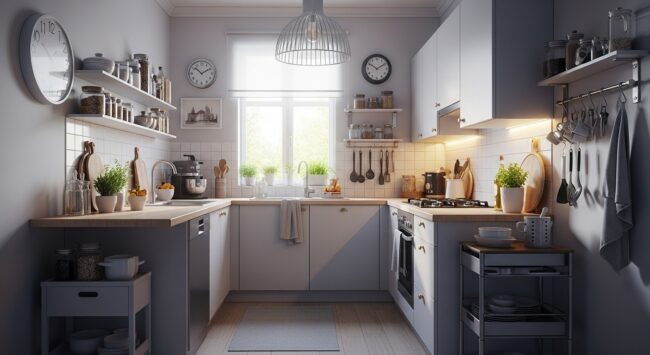
A small kitchen can quickly start to feel crowded, especially when storage is limited and everything competes for space. Cooking becomes harder, movement feels restricted, and even cleaning feels like a task. But the good thing is, you don’t need expensive renovation work to fix it.
With the right visual tricks, smart storage ideas, and layout improvements, you can make your kitchen feel significantly bigger, brighter, and more comfortable.
Let’s go step by step in a practical and realistic way.
1. Clear Out Visual Noise First
The fastest way to make a small kitchen feel bigger is to reduce visual clutter. When too many items are visible, the brain automatically registers the space as smaller.
Instead of overthinking design changes, start by simplifying what you see every day. Keep only essential items on counters and remove anything that does not support daily cooking.
A cleaner surface creates instant visual space, even if the kitchen size remains the same.
2. Use Light and Neutral Color Tones
Color plays a major role in how spacious a kitchen feels. Dark colors absorb light and make walls feel closer, while light shades reflect brightness and create openness.
Soft whites, light grey, beige, and pastel tones work especially well because they make the space feel airy and fresh.
Even if you cannot repaint the entire kitchen, small changes like lighter cabinet covers, bright tiles, or soft-colored accessories can make a noticeable difference.
3. Improve Lighting for Depth and Airiness
Lighting is one of the most powerful tools for creating a bigger-looking kitchen. A poorly lit space always feels smaller, no matter how well it is designed.
Natural light should be used as much as possible. Avoid blocking windows with heavy curtains or dark materials.
Artificial lighting also matters. Bright ceiling lights combined with under-cabinet LEDs can remove shadows and create a smooth visual flow across the kitchen.
4. Keep Surfaces Clean and Functional
Countertops often become the main reason a small kitchen feels cluttered. Too many items on display reduce working space and create visual pressure.
Instead of filling every corner, keep counters minimal and purpose-driven. Only daily-use items should stay visible, while everything else should be stored properly.
This creates breathing space and improves workflow at the same time.
5. Use Vertical Space Effectively
When floor space is limited, walls become extremely valuable. Vertical storage helps you free up counters and organize things more efficiently.
Wall-mounted shelves, hanging hooks, and magnetic strips allow you to store frequently used items without overcrowding surfaces.
This approach improves accessibility while keeping the kitchen visually clean and structured.
6. Choose Flexible and Space-Saving Furniture
Large and bulky furniture can easily overwhelm a small kitchen. Instead, focus on compact and multi-purpose solutions that can adapt to your needs.
Foldable tables, slim storage carts, and movable units are great options because they offer flexibility without occupying permanent space.
A compact prep station, like a primitive kitchen islands style setup, can also help combine storage and workspace without making the kitchen feel heavy or closed in.
7. Organize Cabinets in a Smarter Way
A kitchen often feels small not because of physical size, but because storage inside cabinets is not optimized.
Using proper internal organization helps unlock hidden space and improves efficiency. Group similar items together and use dividers or containers to avoid messy stacking.
This not only saves space but also reduces time spent searching for things during cooking.
8. Add Reflective Surfaces for Visual Expansion
Reflective materials help create the illusion of a larger kitchen by bouncing light across the room.
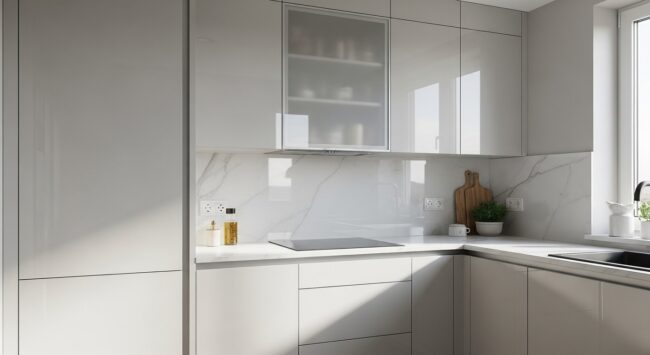
Glossy cabinet finishes, glass doors, and polished backsplashes are simple additions that make a noticeable difference.
These surfaces create depth and reduce the feeling of closed or tight spaces.
9. Stick to a Simple and Consistent Design
Too many patterns, colors, or materials can make a small kitchen feel visually heavy. Simplicity always works better in compact spaces.
A consistent color theme and matching storage elements help create visual harmony. When everything looks aligned, the kitchen automatically feels more open and organized.
10. Reduce Oversized Appliances
Large appliances take up both physical and visual space. In small kitchens, this can quickly make the room feel overcrowded.
Whenever possible, choose compact or built-in versions of appliances. This frees up valuable counter space and improves movement flow.
11. Use Hidden and Unused Spaces
Small kitchens often have unused areas that can be turned into storage without affecting appearance.
Under-sink spaces, cabinet corners, and door backs can all be optimized with simple organizers. These hidden solutions help keep visible areas clean and uncluttered.
12. Create Clear Functional Zones
Even in a compact kitchen, dividing space into simple working zones improves usability and flow.
Cooking, washing, and preparation areas should feel logically separated so movement stays smooth and efficient.
This structure reduces confusion and helps the kitchen feel more organized and spacious.
Final Thoughts
A small kitchen does not have to feel tight or uncomfortable. The real difference comes from how you manage space, light, and organization—not from size alone.
When you reduce clutter, improve lighting, use smart storage, and keep design simple, the kitchen naturally starts to feel bigger and more enjoyable to use.
Small improvements, when done consistently, can completely change the way your kitchen feels every single day.