
For many of us, the dream of owning a home comes with the promise of space. We imagine sprawling lawns, garden parties, or perhaps a quiet corner under an old tree. But reality often looks a bit different. After a few years, that extra quarter acre or the awkward slope behind the garage starts to feel less like a luxury and more like a chore. It becomes the place where the grass grows too long, the weeds take over, or the kids’ old plastic toys go to fade in the sun.
Lately, there has been a shift in how we look at our boundaries. Homeowners are no longer content to just mow the “extra” space. They are reclaiming it. They are looking at the neglected corners of their property and seeing potential for productivity, relaxation, and even a bit of adventure. It is about making every square foot count.
The Problem with the Empty Lawn
The traditional American lawn is a beautiful thing, but it is also a massive drain on resources. We spend hours every weekend pushing a mower, spreading fertilizer, and dragging hoses around just to keep a carpet of green that we rarely actually walk on. It is essentially a decorative rug that costs a fortune in time and money to maintain.
When you start looking at your land as more than just a frame for your house, things get interesting. That unused patch of dirt in the back could be a source of food. It could be a sanctuary for local birds and bees. It could even be a workspace that gets you out of the kitchen and into a creative flow. Reclaiming land is not just about construction. It is about intentionality.
Turning Dirt into Dinner
One of the most common ways people are taking back their land is through intensive gardening. We are seeing a move away from the hidden “patch” in the corner toward integrated edible landscapes. Why have a hedge of privet when you can have blueberry bushes? Why plant a decorative maple when a semi dwarf apple tree provides shade and snacks?
Raised beds are appearing in front yards and side yards. People are realizing that they do not need a farm to be a farmer. By converting just a small portion of unused turf into garden beds, families are finding a new connection to their food and a legitimate reason to spend time outside together. It turns a dead zone into a destination.
Creating a Destination at Home
Speaking of destinations, many homeowners are using their extra space to build specialized structures. Sometimes, a garden shed or a basement office just does not cut it. We need a place that is dedicated to a specific craft, hobby, or need.
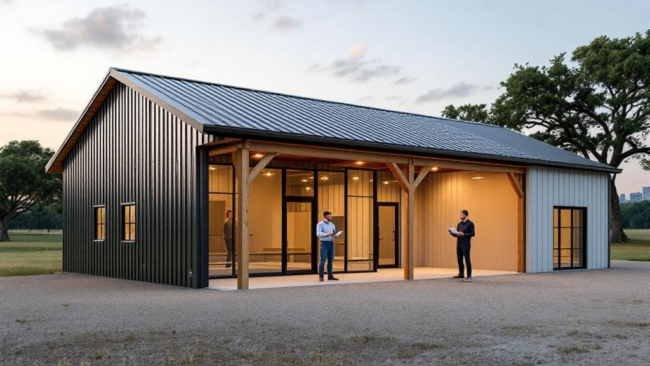
This is where permanent, high-quality additions come into play. Many people are opting for custom post-frame buildings to solve their space problems because they are incredibly versatile. Because they rely on large posts buried in the ground for support, they can be built quickly and offer huge open interior spaces without the need for load-bearing walls. Whether someone needs a massive workshop for woodworking, a climate-controlled art studio, or a “barndominium” style guest house, this approach allows them to maximize their land without the complexity of traditional stick-built construction.
It is about creating a “third space” right on your own property. It provides a sense of separation from the main house, which is something many of us have lacked since the world shifted toward more remote work and home-based living.
Restoring the Wild
Not every reclaimed space needs to be productive in a human sense. A growing number of homeowners are choosing “rewilding.” Instead of fighting nature to keep a pristine lawn, they are inviting it back in. By planting native wildflowers and grasses, they are turning unused land into a habitat.
This is often the most rewarding way to reclaim land because it requires the least amount of physical labor over time. Once the native plants take hold, they thrive on their own. You end up with a pocket of nature that changes with the seasons. It brings a sense of calm to the property that a flat lawn never could. You start to see butterflies, hummingbirds, and beneficial insects that you haven’t seen in years.
The Value of Utility
Finally, there is the simple matter of storage and organization. We all have “stuff.” Boats, campers, seasonal equipment, or classic cars often end up parked on the grass or crowding a driveway. This not only looks messy but can actually damage the items and the land.
Reclaiming land for utility means creating a dedicated, organized spot for these things. By clearing out an overgrown area and installing a proper pad or a simple structure, homeowners are freeing up their driveways and protecting their investments. It makes the entire property feel larger and more intentional.
Making the First Move
Reclaiming land does not have to happen all at once. It starts with a walk around the perimeter. It starts with asking, “Why is this area empty?” and “What do I actually need more of in my life?”
Whether it is a garden, a workshop, or a wildflower meadow, the goal is the same. Your home is your sanctuary, and every inch of it should serve a purpose. When we take the time to look at our land with fresh eyes, we realize that we have so much more room to grow than we thought.