
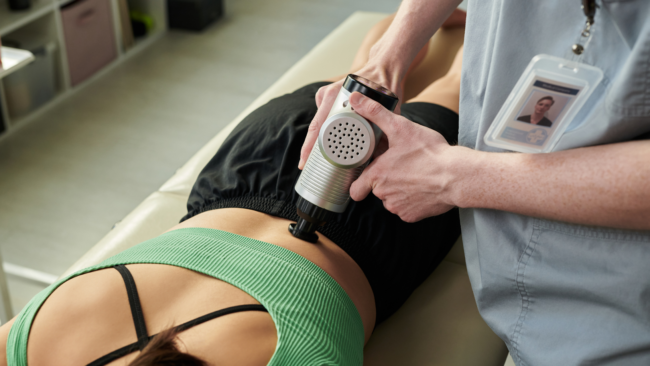
Hard training breaks your body down deliberately. That’s the whole mechanism behind getting stronger. But here’s what most athletes underestimate: the session itself isn’t where progress gets made. Progress happens during recovery. Skip that part, and you’re essentially doing damage you never cash in on.
The numbers back this up. According to the CDC, more than 1 in 4 working adults experience low back pain, and athletes carry even more spinal stress from heavy loading and repetitive movement patterns. If you’re serious about staying consistent and injury-free, a targeted recovery tool isn’t a luxury. It’s infrastructure.
What a Back Massager Actually Does for Your Recovery
The smartest athlete recovery tips aren’t the most complex ones. Often, the highest-leverage change is the simplest: apply targeted pressure to the muscles taking the most punishment, your lats, lower back, and thoracic spine, using a quality back massager after hard sessions.
It Gets Blood Moving Where It Matters
There’s a reason recovery professionals talk about circulation constantly. Using a muscle recovery back massager within two hours post-training drives oxygenated blood into fatigued tissue while flushing out lactic acid buildup. Research shows that massage is associated with a 13% improvement in DOMS measures following exercise. Across a full training week, that edge compounds noticeably.
Think of it like clearing a drain. The faster metabolic waste moves out, the sooner your muscles stop sending distress signals.
It Protects Your Range of Motion
Tight back muscles aren’t just uncomfortable, they quietly sabotage your mechanics. They restrict your hips. They pull on your shoulders. They make every subsequent session slightly less effective without you fully realizing why.
Consistent post-workout back relief breaks that cycle. Add five minutes of light stretching immediately after your massage session, and you’ll feel the difference in your movement quality within days. The two habits together outperform either one in isolation by a noticeable margin.
You Don’t Need a Clinic Appointment
This is where the convenience argument wins outright. Osim’s back massager brings professional-grade kneading and shiatsu techniques directly into your living room, available every single day, on your schedule. That kind of consistent access is what genuinely moves recovery metrics over time. Sporadic clinic visits simply can’t replicate it.
How It Compares to the Other Tools in Your Bag
Understanding where a back massager fits within your broader toolkit helps you use each tool correctly rather than redundantly.
Versus Foam Rollers and Massage Guns
Foam rollers and massage guns are genuinely useful. But they demand your active effort, technique, and body positioning, which matters when you’re exhausted post-training. A back massager handles the work for you, covering a broader posterior chain surface with steady, consistent pressure. Use the back massager for full posterior coverage; reserve the massage gun for isolated knots in calves or forearms where precision matters more than coverage.
Versus Compression Boots and Heat Therapy
Compression boots excel at lower-body recovery, but they don’t touch your back. Heat therapy adds genuine comfort but provides minimal mechanical benefit for tight fascia on its own. A back massager with an integrated heat setting delivers both tissue work and warmth simultaneously. That combination is meaningfully more effective than either approach alone, especially for the lumbar region after heavy loading days.
Using Your Back Massager With Intention
Casual, occasional use produces weak results. Structured use produces real ones. Technique and timing matter far more than athletes typically expect.
Timing Is Everything
The optimal window for a muscle recovery back massager session falls between three and twenty-four hours post-training. Hitting this window addresses peak inflammation before it hardens into stubborn soreness. During high-volume training blocks, even a brief maintenance session on rest days prevents posterior chain tightness from accumulating unnoticed.
How to Actually Apply It
Always work outward from the spine, never apply direct pressure to the vertebrae themselves. Five to ten minutes per session, no more than twice daily, covers most recovery needs without overstimulating the tissue. Respect the limits.
Building It Into a Sequence
Here’s a sequence that takes under twenty minutes and genuinely works: light foam rolling first, then your back massager session, followed by a short walk and intentional hydration. Each phase primes the next. It’s a system, not a collection of habits.
What to Look For When Choosing a Device
Not all massagers are built for athletes. The difference between a budget unit and a quality device shows up within the first few weeks of serious use.
The best back massager for recovery should include body scanning technology, multiple technique modes (shiatsu, kneading), adjustable intensity, integrated heat, and some form of manual or app-based control. These features let you customize each session to match how your body actually feels that day, which changes constantly.
On pure ROI, the math is straightforward. Professional massage sessions typically run $80–$130 each. A quality home device pays for itself within a few months of regular use, with unlimited daily access included.
Recovery Doesn’t Stop With the Massager
Massage accelerates recovery, but it doesn’t complete it alone.
Hydration and nutrition do heavy lifting. Prioritize water and protein within an hour post-training to give your tissues the actual building blocks for repair. The massager improves circulation; nutrition gives that circulation something to deliver.
Sleep is non-negotiable. Tissue repair happens during rest, not during the session, not during the walk afterward. Seven to nine hours of quality sleep combined with nightly stretching makes every other recovery investment compound faster. There’s no workaround for this one.
What Athletes Actually Report
Across running, lifting, and team sports, athletes who maintain structured recovery, including regular sports recovery massage, consistently describe shorter soreness timelines and noticeably better week-to-week consistency. The throughline isn’t a specific brand or setting. It’s the discipline of treating recovery like training, showing up for it with the same commitment.
The Bottom Line
Back soreness drains athletic performance quietly, long before it becomes an obvious injury. A well-structured post-workout back relief strategy centered on a quality back massager and supported by smart nutrition, real sleep, and consistent flexibility work gives your body the exact conditions it needs to rebuild stronger between sessions.
Recovery isn’t separate from your training program. It is your training program. Take it seriously, and the gap between plateauing athletes and progressing ones becomes very easy to understand.
Common Questions About Back Massagers for Athletes
When is the best time to use a back massager after training?
Within two to twenty-four hours post-session is ideal. This window clears lactic acid and reduces inflammation before DOMS fully develops, making your next session noticeably more comfortable.
How does a back massager compare to a massage gun or foam roller?
Back massagers cover a larger area with consistent, hands-free pressure. Foam rollers and massage guns require active effort and technique, making them better suited for precise, localized muscle work rather than broad posterior chain recovery.
Why do athletes choose at-home devices over scheduled massage appointments?
Consistency and accessibility. Daily use without scheduling friction or added cost makes structured recovery sustainable across an entire training season, something clinic visits simply can’t replicate.
How often should you use a back massager for meaningful results?
Once daily after training suits most athletes well. During heavy training blocks, short maintenance sessions on rest days help prevent accumulation of posterior chain tightness. Avoid exceeding two sessions per day in the same area.
What settings work best for lower back tension specifically?
Begin with medium intensity in kneading or shiatsu mode, with heat activated if your device supports it. Increase intensity gradually based on comfort, and limit lower back sessions to five to eight minutes at a time.