
Buying your first home is arguably one of the most significant milestones in your life. It is a mix of exhilaration and terror. I still remember the first time I sat across from a loan officer; the jargon alone felt like a foreign language. You aren’t just buying a place to sleep—you are navigating a complex financial maze involving credit scores, market trends, and legal contracts.
According to the Consumer Financial Protection Bureau (CFPB), educated homebuyers are significantly less likely to face foreclosure or financial distress later on. That is why preparation is non-negotiable. In this guide, I will walk you through the financial prep, the house hunt, and the closing process. My goal is to move you from “overwhelmed” to “empowered” with practical, actionable tips you can use today.

Quick snapshot: the 10 tips
For those in a rush, here is your roadmap:
- Check and improve your credit score.
- Figure out how much you can truly afford.
- Save for a down payment and closing costs.
- Get pre-approved before you shop.
- Learn mortgage types and pick what fits.
- Look for first-time buyer grants & programs.
- Choose the right agent and lender.
- Always get a home inspection and do due diligence.
- Don’t take on new debt or big purchases during the process.
- Budget for ongoing costs & plan an emergency fund.
Deep dive: 10 steps to owning your first home
- Check and improve your credit
Before you even look at a Zillow listing, look at your credit report. Your credit score is the single biggest factor determining your mortgage interest rate. According to data from Bankrate, the difference between a score of 760 and 620 can mean paying tens of thousands of dollars more in interest over the life of a 30-year loan.
Go to AnnualCreditReport.com to pull your reports for free. I recommend doing this months in advance. Look for errors—like a bill you paid that shows up as late—and dispute them immediately.
If your score needs a boost, focus on credit utilization. Try to pay down credit card balances so they are below 30% of your limit. Also, a common mistake I see people make is closing old credit cards to “clean up” their finances. Don’t do it! Closing old accounts shortens your credit history, which can actually hurt your score. Consistency is key here.
- Figure out how much you can actually afford
There is a dangerous gap between “how much the bank will lend you” and “how much you can afford without eating ramen for ten years.” Lenders look at your gross income, but they don’t see your daycare costs, your love for travel, or your aggressive savings goals.
A solid rule of thumb recommended by experts at NerdWallet is the 28/36 rule: spend no more than 28% of your gross monthly income on housing expenses and no more than 36% on total debt (including student loans and car payments).
When you run the numbers, use a mortgage affordability calculator that includes the “hidden” PITI: Principal, Interest, Taxes, and Insurance. Don’t forget homeowners association (HOA) fees if you are looking at condos. I recall realizing that a “cheaper” condo was actually more expensive monthly than a townhouse once the $400 HOA fee was added. Know your hard limit before you fall in love with a house.
- Save for down payment and closing costs
Let’s bust a major myth right now: You do not need a 20% down payment to buy a home. While 20% helps you avoid Private Mortgage Insurance (PMI), it is not a barrier to entry. According to HUD (U.S. Department of Housing and Urban Development), many first-time buyers put down between 3% and 6%.
However, the down payment isn’t the only cash you need. Many first-timers are blindsided by closing costs. These are fees for appraisals, titles, and loan origination, typically running 2% to 5% of the loan amount. On a $300,000 home, that is an extra $6,000 to $15,000 you need in liquid cash on closing day.
When saving, keep your down payment funds liquid—don’t lock them in volatile stocks right before you buy. I also suggest keeping a “buffer” fund. The last thing you want is to spend every last penny at the closing table and have zero dollars left for moving trucks.
- Get pre-approved, not just pre-qualified
In a competitive market, a “pre-qualification” is just a rough estimate. A pre-approval is a lender’s verified commitment to lend you money. It tells sellers you are a serious buyer who has already passed a financial background check.
To get this, you will need to provide documentation: W-2s, tax returns (usually two years), and bank statements. According to Zillow, having a pre-approval letter in hand is often required just to make an offer.
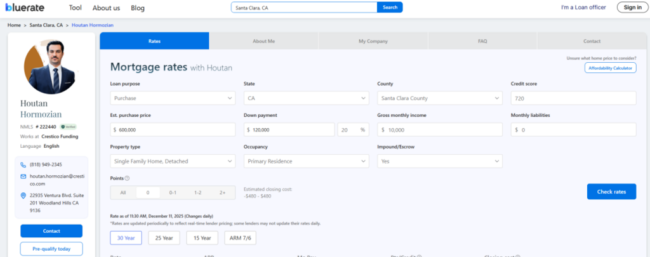
Navigating this paperwork can be daunting, and every lender has different requirements. It is highly recommended to consult with a professional loan officer early in the process to get a clear picture of your borrowing power. For example, experienced officers like Houtan Hormozian in CA offer free consultations to help you understand your specific situation and get that crucial pre-approval letter ready.
- Understand mortgage types and choose wisely
Mortgages aren’t one-size-fits-all. You need to pick the “flavor” that suits your financial life.
- Conventional Loans: Great if you have decent credit (usually 620+) and a manageable debt-to-income ratio.
- FHA Loans: Backed by the government, these are a lifeline if your credit score is lower (down to 580) or you have a small down payment (3.5%).
- VA and USDA Loans: If you are a veteran or buying in a rural area, these can offer 0% down payment options.
You also need to choose between a Fixed-Rate (your payment never changes) and an Adjustable-Rate Mortgage (ARM). While ARMs might start with a lower rate, they are risky if rates rise later. HUD resources suggest that for most first-time buyers planning to stay put, a 30-year fixed rate offers the most stability and peace of mind.
- Explore first-time buyer programs & assistance
Free money exists—you just have to look for it. Almost every state has a Housing Finance Agency that offers Down Payment Assistance (DPA) programs. These can come in the form of grants (which you don’t pay back) or low-interest second loans.
Also, look into Mortgage Credit Certificates (MCC), which can convert some of the mortgage interest you pay into a federal tax credit. The CFPB recommends contacting a HUD-approved housing counselor who can help you find local programs you qualify for. I’ve seen buyers save thousands upfront simply because they took the time to apply for a state grant.
- Choose the right real estate agent and lender
Your agent and lender are your teammates. If they are slow to respond or bad at explaining things, you are going to have a rough ride.
For real estate agents, look for someone who specializes in working with first-time buyers. They need to have the patience to explain the process, not just push for a quick sale. For lenders, shop around. Don’t just take the first offer from your primary bank. A study referenced by Bankrate showed that borrowers who got quotes from multiple lenders saved substantial amounts over the life of the loan. Ask about the APR (Annual Percentage Rate), not just the interest rate, as the APR includes fees.
Pro tip: Ask your potential agent, “How will you help me win a bidding war without overpaying?” Their answer will reveal their expertise.
- Inspect, inspect, inspect — and don’t skip due diligence
In hot markets, you might feel pressured to “waive the inspection” to make your offer more attractive. Do not do this.
A home inspection is your only protection against buying a money pit. You need to know if the roof is 20 years old, if the wiring is outdated, or if there are termite issues. Investopedia highlights that inspection reports are also powerful negotiation tools. If the inspector finds $5,000 worth of necessary repairs, you can ask the seller to fix it or lower the price.
During my first purchase, the inspection revealed a cracked heat exchanger in the furnace—a safety hazard I would never have noticed. That $500 inspection saved me a $4,000 repair bill immediately after moving in.
- Avoid major financial changes during the process
There is a “quiet period” between getting your offer accepted and closing on the house. During this time, your finances are under a microscope. Lenders typically do a final check of your credit and employment just days before funding the loan.
Investopedia warns against:
- Buying a new car or furniture on credit.
- Quitting or changing jobs.
- Moving large sums of money between bank accounts (this triggers money laundering flags).
I know it’s tempting to buy that new sofa for your new living room, but wait until you have the keys in your hand. Any change in your debt-to-income ratio can cause your loan to be denied at the last minute.
- Plan for ongoing costs and maintenance
The mortgage check is just the beginning. When you rent, a broken pipe is the landlord’s problem. When you own, it’s yours.
Financial experts often cite the 1% Rule: budget to spend about 1% of your home’s purchase price on maintenance annually. On a $300,000 home, that’s $3,000 a year. Some years you’ll spend less, but eventually, you’ll need a new water heater or roof.
The DFPI (Department of Financial Protection and Innovation) stresses the importance of an emergency fund. Ensure you have cash reserves specifically for the house, separate from your personal emergency fund. Being “house poor” (having a house but no cash to live) is a stressful place to be.
Common mistakes first-time buyers make
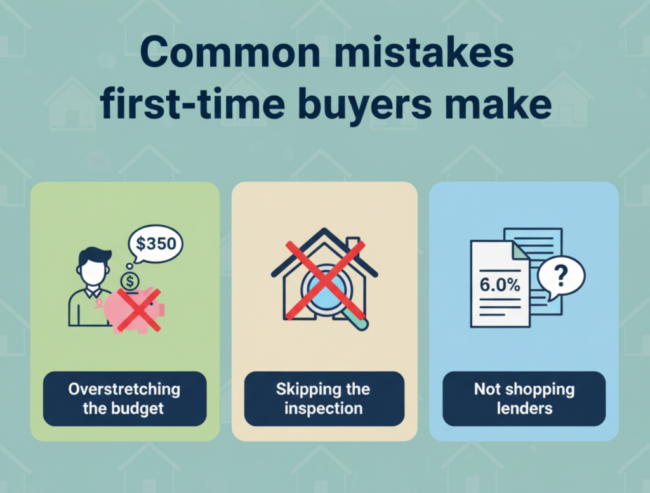
Even with the best advice, it is easy to slip up. Here are three common traps to avoid, according to Zillow and industry data:
- Overstretching the budget: Just because a lender approves you for $500k doesn’t mean you should spend it. Buying at the top of your limit leaves no room for fun, travel, or emergencies.
- Skipping the inspection: I can’t stress this enough. Buyers who rush often face “buyer’s remorse” when expensive issues crop up months later.
Not shopping lenders: Many buyers accept the first mortgage offer they get. Doing so can cost you thousands in extra interest. Always compare Loan Estimates.
Conclusion & next steps
Buying a home is a marathon, not a sprint. By checking your credit, understanding your true budget, and building the right team, you are already ahead of the pack. Remember, the goal isn’t just to buy a house—it is to buy a hacome you can afford and enjoy for years to come.
Ready to take the next step? Don’t navigate the market blindly. I highly recommend you take action today: pull your credit report and start crunching numbers. To make the financing part easier, you can compare current mortgage rates and find the right professionals for your needs on Bluerate. It’s a free platform designed to help you shop for loans and compare loan officers transparently, ensuring you get the best deal possible for your new home.