
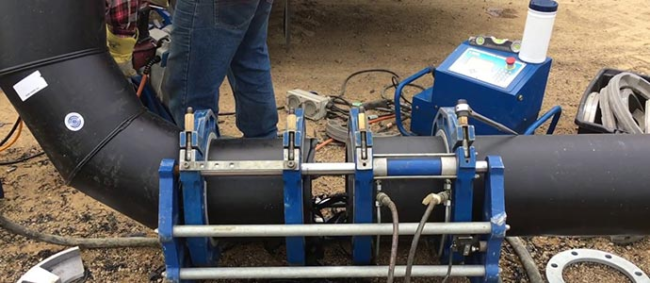
Poly pipes serve as reliable channels for water, gas, and industrial fluids. Their strength and flexibility support a wide range of construction and infrastructure projects. Skilled welding ensures these pipes remain secure and leak-free.
Professional pipe welders rely on proven methods to join poly materials. Each technique suits specific pipe sizes, pressure levels, and site conditions. Careful selection of a suitable method based on an expert’s advice on welding poly pipe protects system performance for many years.
Butt Fusion Welding For Strong Pipe Joints
Butt fusion welding remains one of the most trusted techniques for poly pipes. This method joins two pipe ends through controlled heat and pressure. A seamless joint forms once the material cools.
Precision plays a key role in this process. Pipe ends require perfect alignment before heat application. Even pressure ensures uniform bonding across the joint.
Large diameter pipes benefit greatly from this technique. High-strength connections handle demanding fluid flow. This method supports long-distance pipeline projects with confidence.
Electrofusion Welding For Controlled Connections
Electrofusion welding uses special fittings with built-in heating elements. Electric current melts the inner surface of the fitting and pipe. A secure bond forms once cooling completes.
This method suits tight spaces and repair work. Compact equipment allows easy handling at confined sites. Controlled heat delivery reduces the risk of joint failure.
Connection accuracy remains a strong advantage. Each fitting includes data for the correct voltage and time. This precision supports consistent results across installations.
Key Features of Electrofusion Welding:
- Pre-programmed fittings guide heat and fusion time.
- Compact tools suit limited access areas.
- High reliability for repair and extension work.
Socket Fusion Welding for Small Diameter Pipes
Socket fusion welding works well for smaller poly pipe systems. A heated tool softens the pipe and fitting surfaces. Pressed together, these parts create a tight seal.
This method offers quick setup and ease of use. Simple tools allow rapid joint creation. This efficiency suits plumbing and low-pressure applications.
Uniform heating ensures joint integrity. Proper temperature control prevents material damage. Strong seals support steady fluid movement.
Extrusion Welding for Complex Pipe Structures
Extrusion welding supports the fabrication and repair of poly pipe assemblies. A heated extruder deposits molten material along a joint. This added layer strengthens the seam.
This technique suits irregular shapes and thick walls. Custom fittings and large tanks benefit from this approach. Skilled handling ensures smooth, durable joints.
Surface preparation remains essential. Clean edges allow proper adhesion. Strong bonds result from careful material control.
Situations Where Extrusion Welding Works Best:
- Custom pipe sections and fittings.
- Repair of damaged pipe walls.
- Fabrication of large poly containers.
Hot Gas Welding For Light Poly Fabrication
Hot gas welding applies heated air to soften poly surfaces. A filler rod melts into the joint area. This process creates a smooth connection.
This method suits thin materials and sheet work. Ventilation ducts and light piping systems gain secure seams. Simple equipment supports flexible use.
Control remains essential during heat application. Proper temperature prevents warping. Even filler placement ensures clean finishes.
Expert welding methods keep poly pipe systems safe and durable. Each technique, based on an expert’s advice on welding poly pipe, serves specific project needs with precision. Skilled application thus ensures long-lasting performance and reliability.