
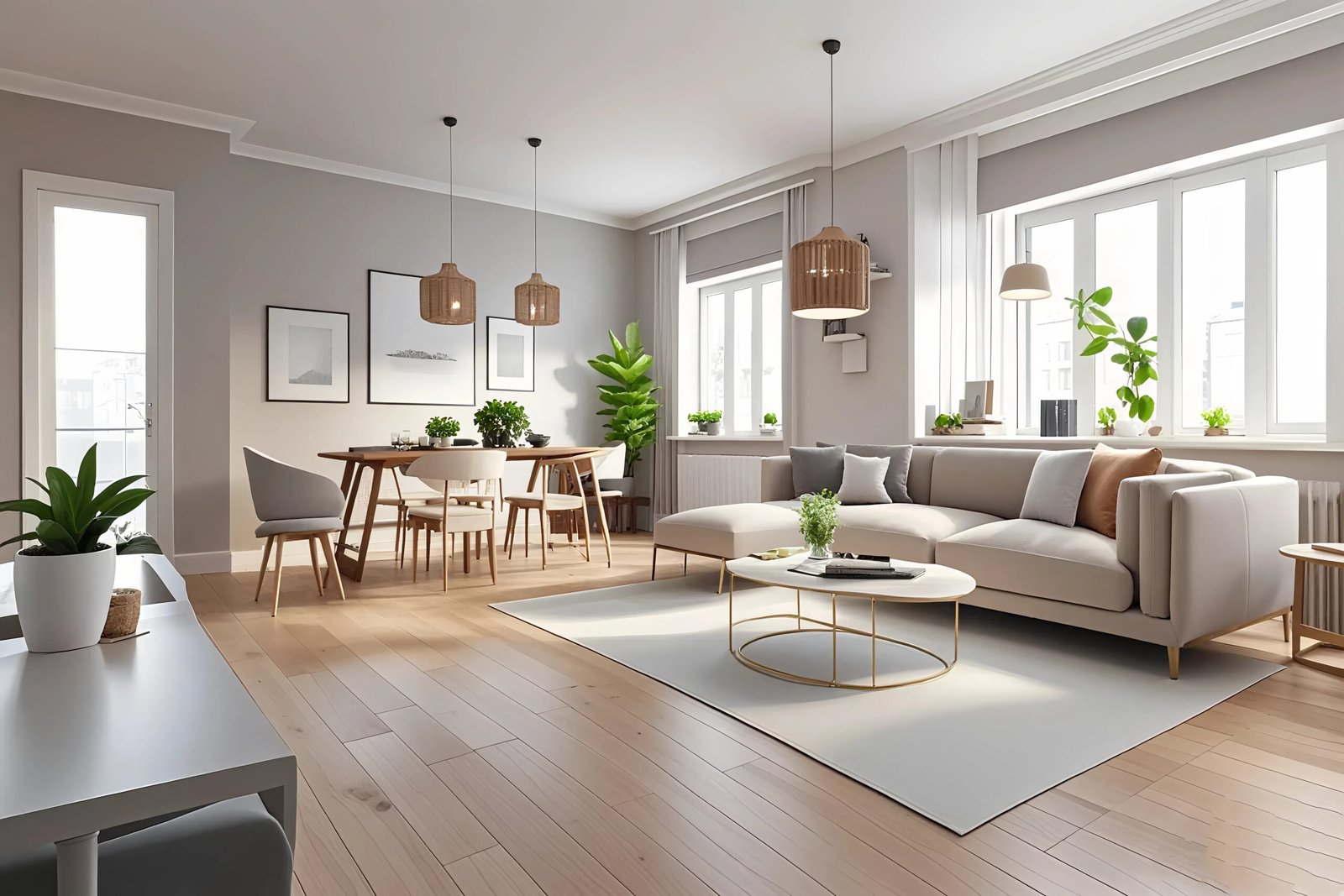
The living room carries more weight than almost any other space in the home. It is where families gather after long days, where guests form their first real impression, and where small design choices tend to compound into a feeling of comfort or clutter. Homeowners today are rethinking this room not as a static showcase but as a functional, layered environment that reflects how people actually live. With renovation budgets tightening in many households, the smartest upgrades are the ones that deliver visible impact without requiring a full teardown.
Rethinking Air Movement And Lighting Together
One of the most overlooked upgrades in a living room is the ceiling itself. Homeowners spend enormous energy on furniture and paint while ignoring the fixture that runs almost year-round. A well-chosen ceiling fan does more than move air; it anchors the room’s design language and can meaningfully reduce cooling costs during warmer months. According to Hunter Fan (https://www.hunterfan.com/), “pairing a fan with efficient blade design and integrated lighting allows a single fixture to serve two purposes at once, which matters in rooms where ceiling space is limited. Replacing a dated, oversized fan with a slimmer, modern silhouette can instantly make a ceiling feel taller and the room feel more current. This single swap is often cited by interior designers as one of the highest-impact, lowest-cost changes available, since it touches both comfort and aesthetics simultaneously.”
Layered lighting deserves equal attention. Relying on one central source, whether a fan light or an overhead fixture, tends to flatten a room. Adding floor lamps, picture lights, or low-profile sconces creates depth and lets homeowners adjust mood throughout the day. Studies on residential lighting consistently show that rooms with three or more light sources are rated as more inviting by occupants than those lit by a single overhead fixture.
Furniture Arrangement As A Design Tool
Before buying anything new, many designers recommend testing how existing furniture is arranged. A living room where every piece hugs the wall often feels sparse and formal. Pulling seating slightly inward, angling chairs toward a focal point, and leaving breathing room around walkways can make a space feel more intentional without spending a dollar. Surveys of home staging professionals have found that thoughtful furniture placement alone can improve a room’s perceived value by a noticeable margin, which is why the technique is a staple in resale preparation.
Once arrangement is settled, texture becomes the next lever. A room built entirely from smooth, hard surfaces, glass tables, leather sofas, painted walls, tends to feel cold regardless of color choices. Introducing a wool throw, a woven basket, or a textured area rug softens the visual field and adds tactile warmth that photographs and in-person visits both pick up on.
Color, Contrast, And The Psychology Of Comfort
Paint remains the fastest way to transform a living room, but the trend has moved away from stark white toward warmer, more grounded neutrals. Soft greiges, muted greens, and warm terracottas are showing up repeatedly in recent design surveys because they read as cozy rather than clinical. Accent walls have also evolved; instead of a single bold wall, many homeowners are choosing to paint trim, ceilings, or built-in shelving in a contrasting tone, which adds dimension without overwhelming the room.
Contrast extends beyond paint. Mixing metal finishes, matte black hardware against warm wood tones, for instance, gives a room a collected, layered look rather than a matched showroom feel. Designers increasingly advise against uniform metal finishes throughout a space, noting that slight variation reads as more authentic and less staged.
Smart Upgrades That Blend Into The Background
Technology has quietly become part of living room design rather than sitting on top of it. Motorized shades, app-controlled lighting, and fans with remote or voice control are increasingly standard in mid-range renovations. The appeal is not novelty but convenience: being able to adjust airflow, dim lighting, or close blinds without leaving the couch removes small daily frictions that add up over time. Industry data on smart home adoption shows steady year-over-year growth in these categories, suggesting the shift is becoming mainstream rather than a luxury add-on.
Finishing Touches That Signal Intention
The final layer of a living room upgrade is often the most personal: artwork, books, plants, and objects that tell a story about the people who live there. Rooms that feel generic are usually missing this layer entirely. A gallery wall, a well-placed floor plant, or even a stack of well-worn books on a coffee table communicates warmth in a way that furniture alone cannot.
Taken together, these upgrades do not require a complete renovation. They require attention to the details that shape how a room feels day to day, air movement, light, texture, color, and personal touches, each contributing to a living room that leaves a lasting impression on anyone who walks in.