
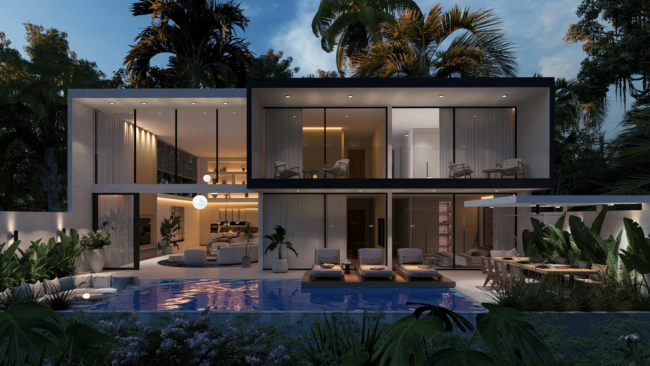
Architecture and interior design are often treated as two separate phases. First, the structure is defined. Then, once everything is fixed, the interior is introduced to “complete” the space.
In practice, this separation rarely works as intended.
At Adoani Studio, we don’t see these as separate disciplines. From the beginning, we approach architecture and interiors as part of the same system—because the way a space is built and the way it is experienced are fundamentally connected.
Where the Disconnection Begins
In many projects, the architectural framework is finalized before interior thinking begins. By the time interior design is introduced, the key decisions—walls, openings, proportions—are already fixed.
This creates limitations.
The interior must adapt instead of being integrated. Materials are selected to fit within an existing structure, and lighting is often added as a secondary layer rather than shaping the space from the beginning.
Over time, this leads to subtle but noticeable issues:
- Transitions between spaces feel abrupt
- Materials change without a clear relationship
- The interior atmosphere does not align with the architectural intent
These are not obvious flaws, but they affect how the space is experienced daily.
Designing as One System, Not Two Layers
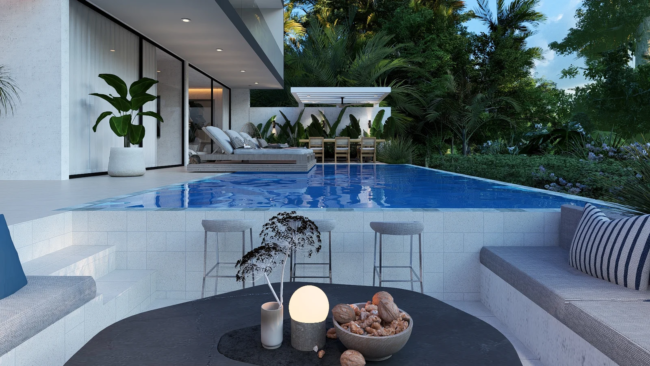
At Adoani Studio, we approach every project as a continuous process.
When we define a wall, we are not only thinking about the exterior form—we are also considering how that surface will feel from the inside. When we place an opening, we think about light, views, and how that space will be used.
This integrated approach allows us to control:
- Spatial flow between rooms
- Light behavior throughout the day
- Material continuity across boundaries
Rather than designing structure first and interiors later, we develop both together, so they support each other from the beginning.
How Architecture Shapes Interior Experience
Before any furniture or finishes are introduced, the interior experience is already defined by architectural decisions.
Key elements that influence interior space:
- Ceiling height and proportions
- Placement and scale of openings
- Depth and layering of spaces
For example, a living space is not just defined by its size. It is shaped by how it connects to other areas, how light enters, and how it opens toward the outdoors.
In a designer villa Koh Samui, these relationships become even more important, because the boundary between interior and exterior is intentionally reduced.
Material Continuity Creates Cohesion
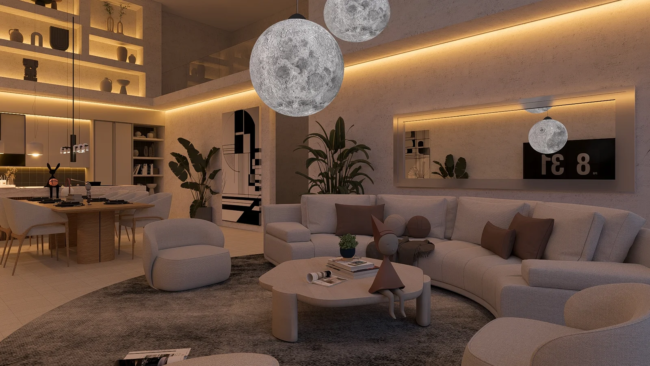
Material is one of the most effective ways to unify architecture and interiors.
When both are designed together, materials can extend across spaces rather than stopping at artificial boundaries.
Instead of introducing multiple finishes, we focus on a restrained palette and how it is applied.
In our projects, this often means:
- A floor material continuing from interior to a covered terrace
- Wall surfaces extending across interior and exterior zones
- Consistent textures that respond to light throughout the day
These decisions create a sense of continuity that feels natural rather than forced.
Light Should Be Designed, Not Added
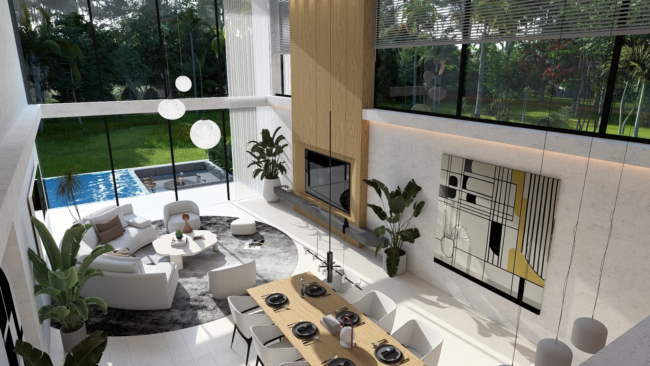
Light is often divided into two categories: natural (architecture) and artificial (interior design). In reality, both should be considered together.
At Adoani Studio, we design light as part of the space itself.
We study:
- How sunlight enters and moves through the space
- How shadows change throughout the day
- How artificial lighting can support this natural rhythm
This approach allows us to:
- Avoid over-lighting or under-lighting spaces
- Create a balanced atmosphere
- Integrate lighting into architectural elements rather than adding fixtures later
When light is treated as part of the architecture, the space feels more intentional.
Transitions Define the Experience
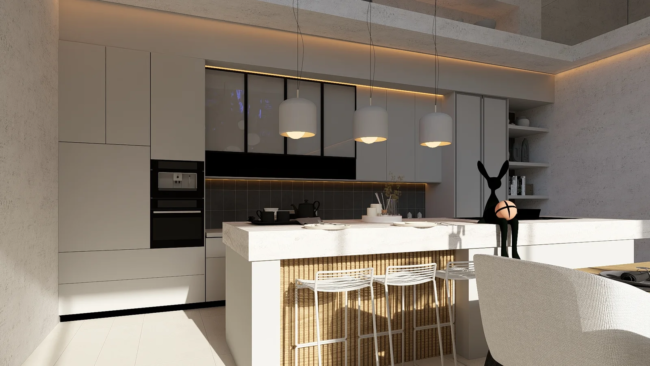
A home is not just a collection of rooms—it is a sequence of experiences.
What matters is not only how each space functions, but how you move between them.
At Adoani Studio, we focus on designing transitions:
- From interior to exterior
- From public to private spaces
- From light to shadow
Instead of creating abrupt changes, we introduce layers—such as covered terraces or semi-open spaces—that soften the transition.
This is particularly important in tropical environments, where indoor and outdoor living are closely connected.
Furniture Is Part of the Spatial Thinking
Furniture is often considered at the final stage, but it plays a critical role in defining how space is used.
We think about furniture early—not in terms of specific pieces, but in terms of how people will occupy the space.
This includes:
- How seating areas define the living space
- How circulation flows around furniture
- How built-in elements integrate with architecture
This ensures that the space functions naturally, rather than being adjusted later to fit furniture.
Avoiding Fragmentation in Design
When architecture and interiors are separated, fragmentation becomes visible.
This can appear as:
- Inconsistent material choices
- Misaligned proportions
- Disconnected spatial flow
These issues are often subtle, but they reduce the overall quality of the space.
By designing everything together, we avoid these inconsistencies and create a more cohesive result.
A Holistic Approach in Tropical Residential Design
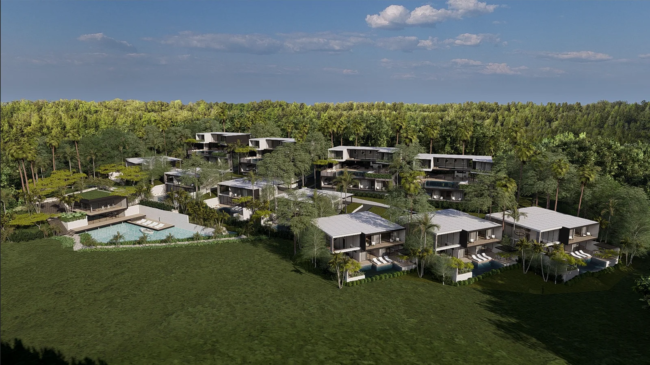
Designing in Koh Samui requires a deeper level of integration.
Projects led by Koh Samui Villa architects often involve:
- Strong indoor–outdoor relationships
- Climate-responsive design
- Durable and natural materials
In this context, separating architecture and interiors creates unnecessary challenges.
At Adoani Studio, we approach these projects holistically—ensuring that every element contributes to the overall experience.
Final Thoughts
Architecture and interior design should never be separate because they are inherently connected.
One defines the structure, the other defines the experience—but both are part of the same process.
At Adoani Studio, we focus on creating spaces where:
- Structure and atmosphere work together
- Materials and light are aligned
- Transitions feel natural and intentional
Because in the end, a well-designed home is not a collection of elements—it is a cohesive experience.
If You’re Planning a Residence in Koh Samui
Designing a home in a tropical environment requires more than visual inspiration.
It requires an integrated approach—where architecture and interiors are developed together.
Working with a team experienced in interior design, Koh Samui ensures that the final result is not only visually refined but also functional, consistent, and comfortable over time.