
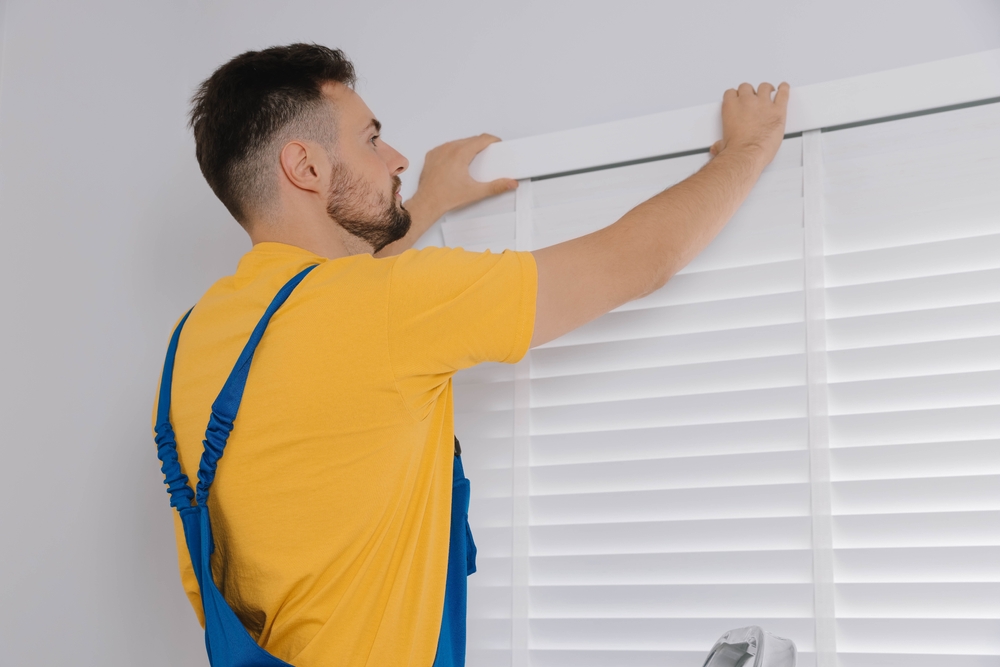
Roller shades occupy an interesting position in the window treatment world. They are often the practical choice, the treatment selected for a home office, a rental property, or a room where functionality matters more than statement-making. But in the hands of a designer who understands what they can do, roller shades become one of the most versatile, elegant, and sophisticated solutions in the window treatment category, capable of achieving results that more ornate options cannot.
The clean lines of a roller shade suit contemporary and modern interiors in a way that drapery and blinds sometimes do not. When the fabric is properly selected, the hardware is high quality, and the installation is precise, a roller shade installation reads as intentional and refined rather than utilitarian. And with motorization, the roller shade becomes a seamlessly integrated element of a smart home system that requires no interaction at all to perform perfectly, day after day.
Shades By Mia Casa’s motorized roller shades, represent the full range of what this treatment type can achieve, from simple manual shades in precision-fabricated widths to fully motorized systems integrated with Lutron and Somfy automation platforms. Every shade is custom fabricated and professionally installed for a result that performs as beautifully as it looks.
The Fabric Decision That Determines Performance
The most consequential decision in a roller shade specification is the fabric, and the right fabric is entirely determined by what the room needs the shade to do. A bedroom that needs complete darkness requires a blackout fabric with side channels that prevent light from entering around the edges of the shade. A home office that needs glare reduction without sacrificing the view requires a solar fabric with an openness factor matched to the specific light conditions of the window. A living room that needs privacy in the evening while maintaining daytime transparency needs a fabric that balances these demands rather than optimizing for one at the expense of the other.
Solar fabrics are available in openness factors ranging from 1 percent, which provides maximum solar control and minimal view-through, to 14 percent, which maintains excellent outward visibility while still filtering direct sunlight. The right openness factor depends on the direction the window faces, the intensity of the sunlight at peak hours, and how much view the occupants want to maintain when the shade is down. This is a specification decision, not a preference decision, and getting it right requires understanding the actual light conditions in the specific room.
Cassette Housings and the Clean Finish
The way a roller shade is mounted and how the roller mechanism is concealed significantly affects the finished appearance of the installation. An exposed roller tube, while functional, presents a mechanical appearance that can conflict with a refined interior. A cassette housing, which is a fabricated enclosure that conceals the roller tube completely, produces a clean, architectural finish that makes the shade look like an intentional design feature rather than a functional addition.
Cassette housings are available in a range of profiles and finishes that can be matched to the window frame, the wall colour, or contrasted as a deliberate design element. Square profile cassettes suit contemporary interiors. Rounded or slimline profiles are available for applications where a lower visual profile is preferred. The cassette finish can be powder-coated in any colour, anodized in aluminum finishes, or fabricated in material that matches the window treatment fabric for a fully integrated appearance.
The Case for Side Channels in Critical Light Control Applications
A standard roller shade without side channels allows light to enter around the sides of the shade between the fabric edge and the window frame. In a bedroom or home theatre application where complete darkness is the goal, this side-light infiltration undermines the performance of even a true blackout fabric. Side channels, which are guide rails mounted on the sides of the window recess that the shade fabric slides into as it descends, eliminate this light gap entirely.
Side channels also provide a secondary benefit of wind stability: a roller shade with side channels is held in its position against air movement from open windows or HVAC vents, preventing the billowing that can cause an unguided shade to contact the window glass repeatedly. For large format shades over significant openings, side channels are a structural consideration as well as a light control one, ensuring that the shade hangs flat and functions smoothly across its full width.
Dual Roller Systems for Complete Flexibility
The dual roller shade system, which mounts two independent shades on the same window, is the roller shade solution that most closely replicates the flexibility of a layered drapery installation. A solar fabric shade provides daytime glare control and privacy while maintaining visual connection to the outdoors. A blackout fabric shade on the same window provides complete light control and privacy for nighttime or media room use. Both operate independently, allowing any combination of the two shades at any position.
The dual roller system requires a cassette designed to accommodate two roller tubes, either side by side or one behind the other in a fascia system. The hardware specification for a dual system requires more careful planning than a single shade, particularly in terms of the cassette profile and the clearance required within the window recess or above the window frame. A professional consultation that includes a site measurement before specifying a dual system ensures that the installation is physically feasible and correctly proportioned for the specific window.
Motorization for Roller Shades: The Practical Standard
Motorized roller shades represent the most natural application of window treatment automation because the roller mechanism is ideally suited to motorization. The motor is concealed within the roller tube, the operation is smooth and quiet, and the integration with smart home platforms is seamless. A motorized roller shade looks identical to a manual shade when not in motion and operates without any visible mechanism change or hardware addition beyond the wall control or the wireless receiver.
For windows that are high, wide, or in a location where manual operation is inconvenient, motorization removes the friction entirely. For households with multiple windows in a single room, a scene-based control that operates all shades simultaneously at a set position is dramatically more practical than adjusting each shade individually. The combination of custom fabrication, proper installation, and motorization produces a roller shade that performs at the highest level and requires essentially no ongoing attention to function perfectly throughout its service life.